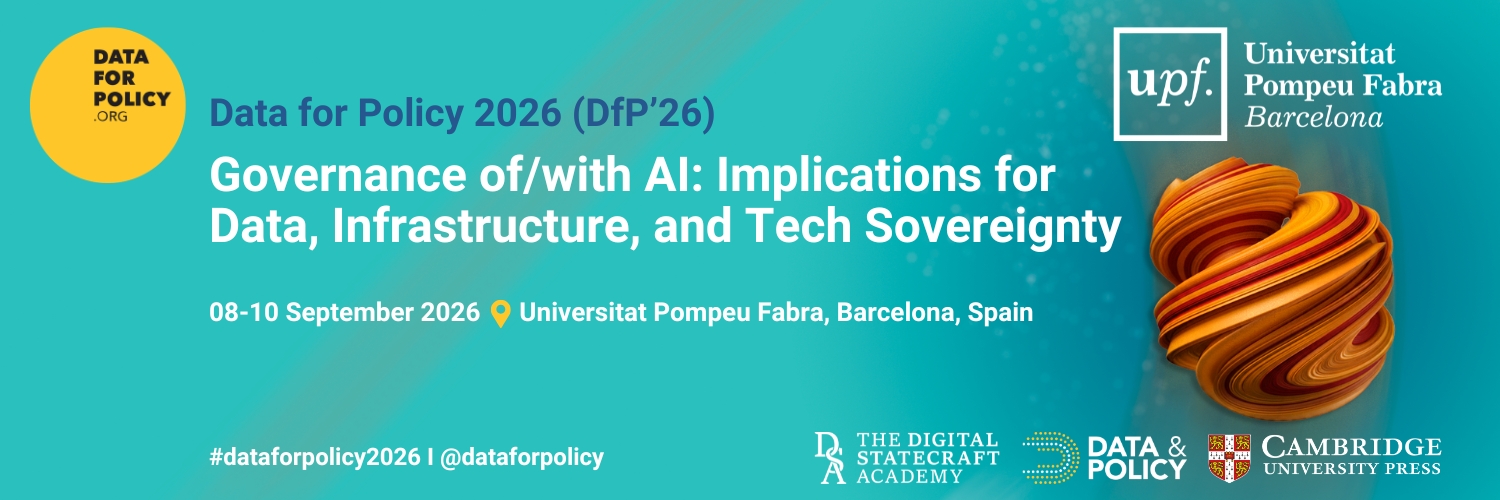
Data for Policy 2026 (DfP’26)
Governance of/with AI: Implications for Data, Infrastructure, and Tech Sovereignty
Universitat Pompeu Fabra, Barcelona, Spain | 8 – 10 September 2026
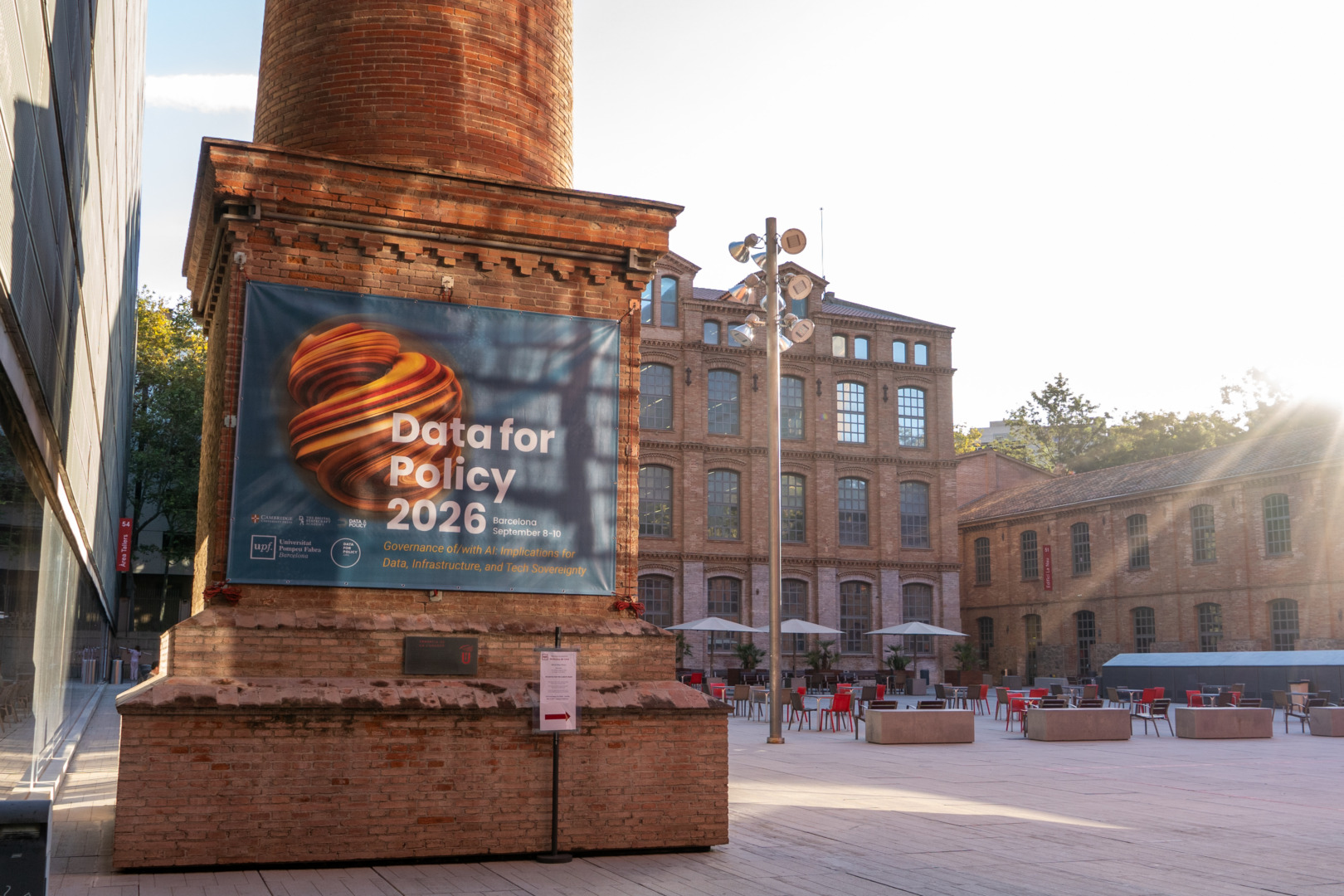
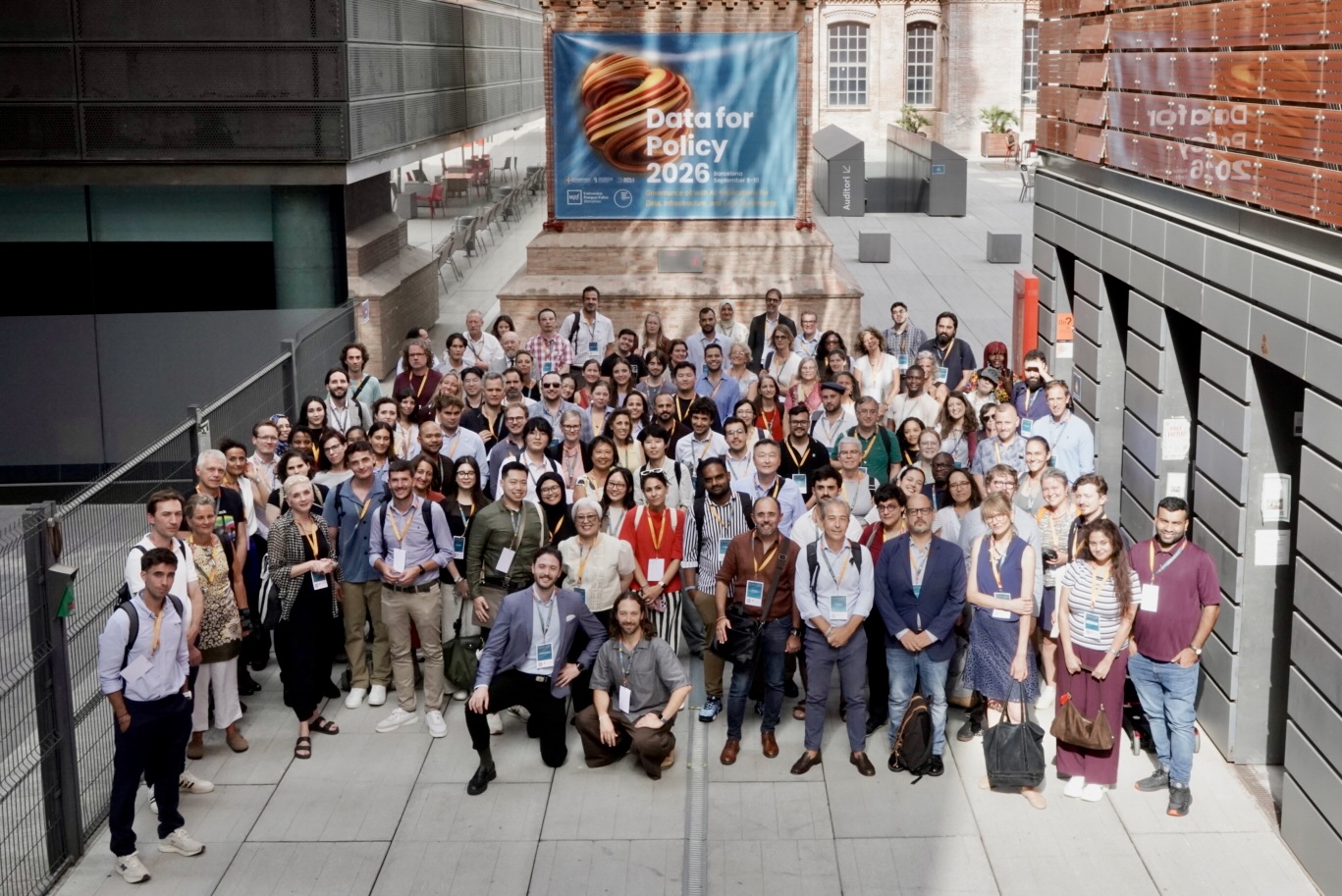
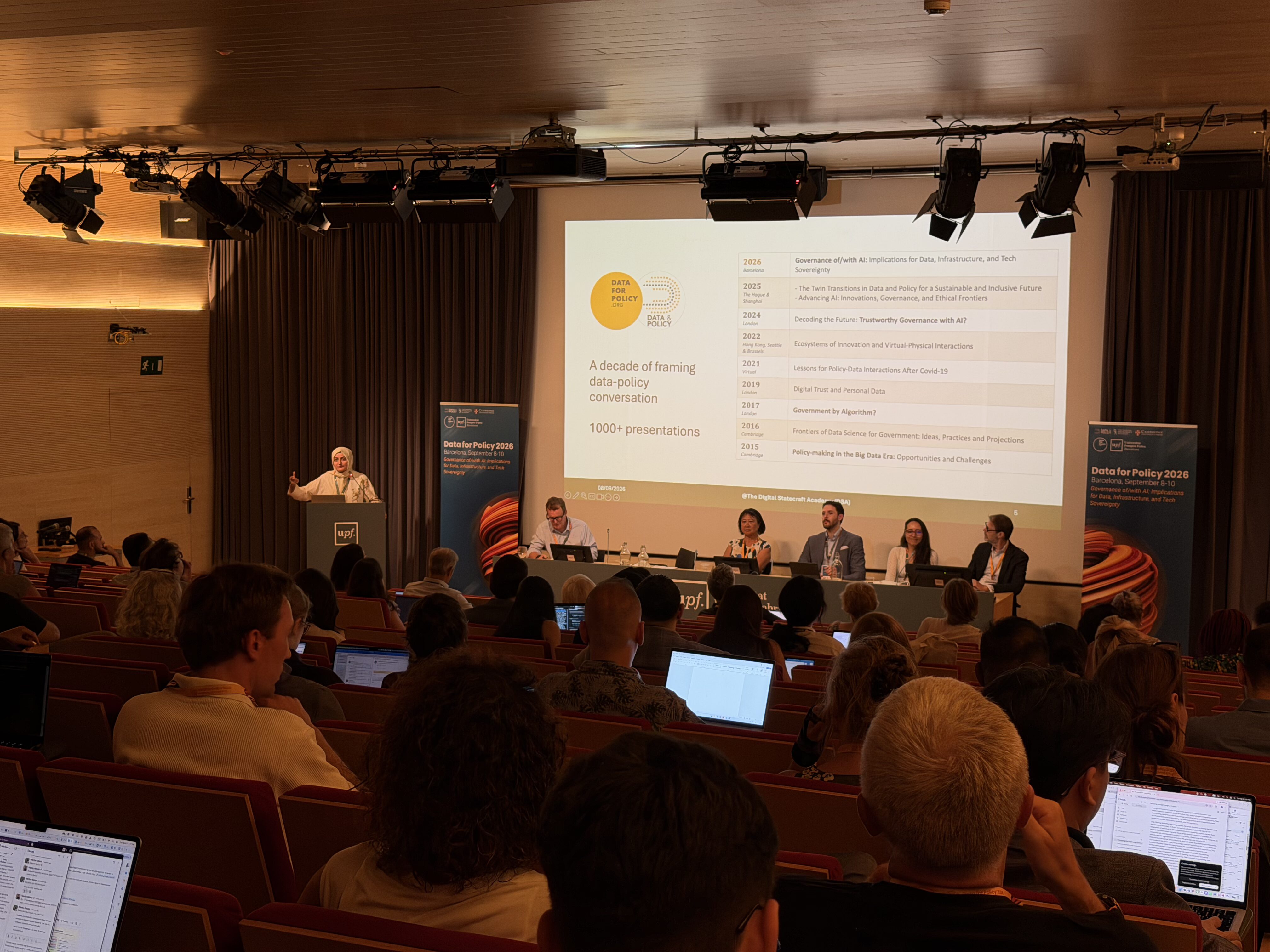
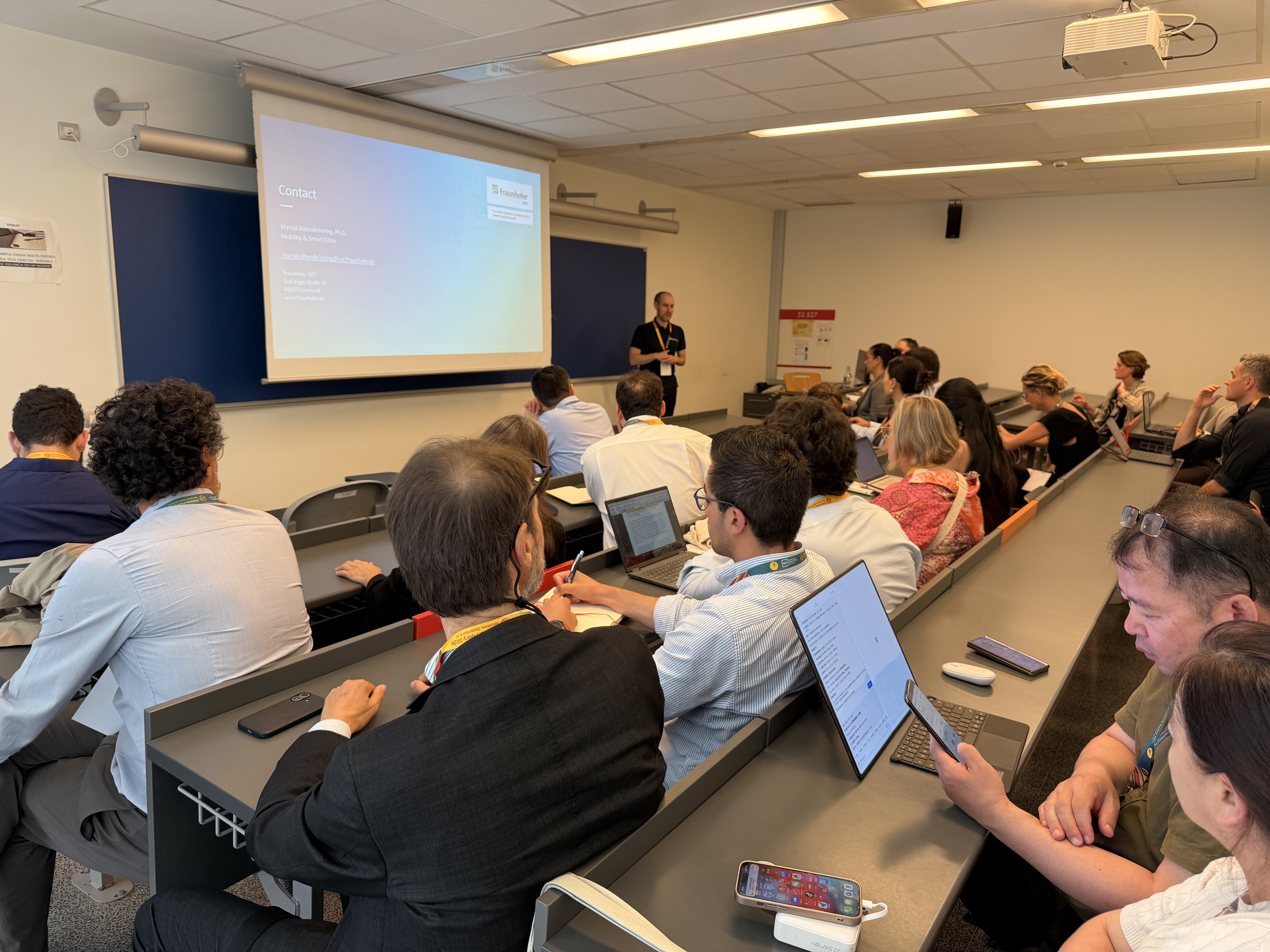
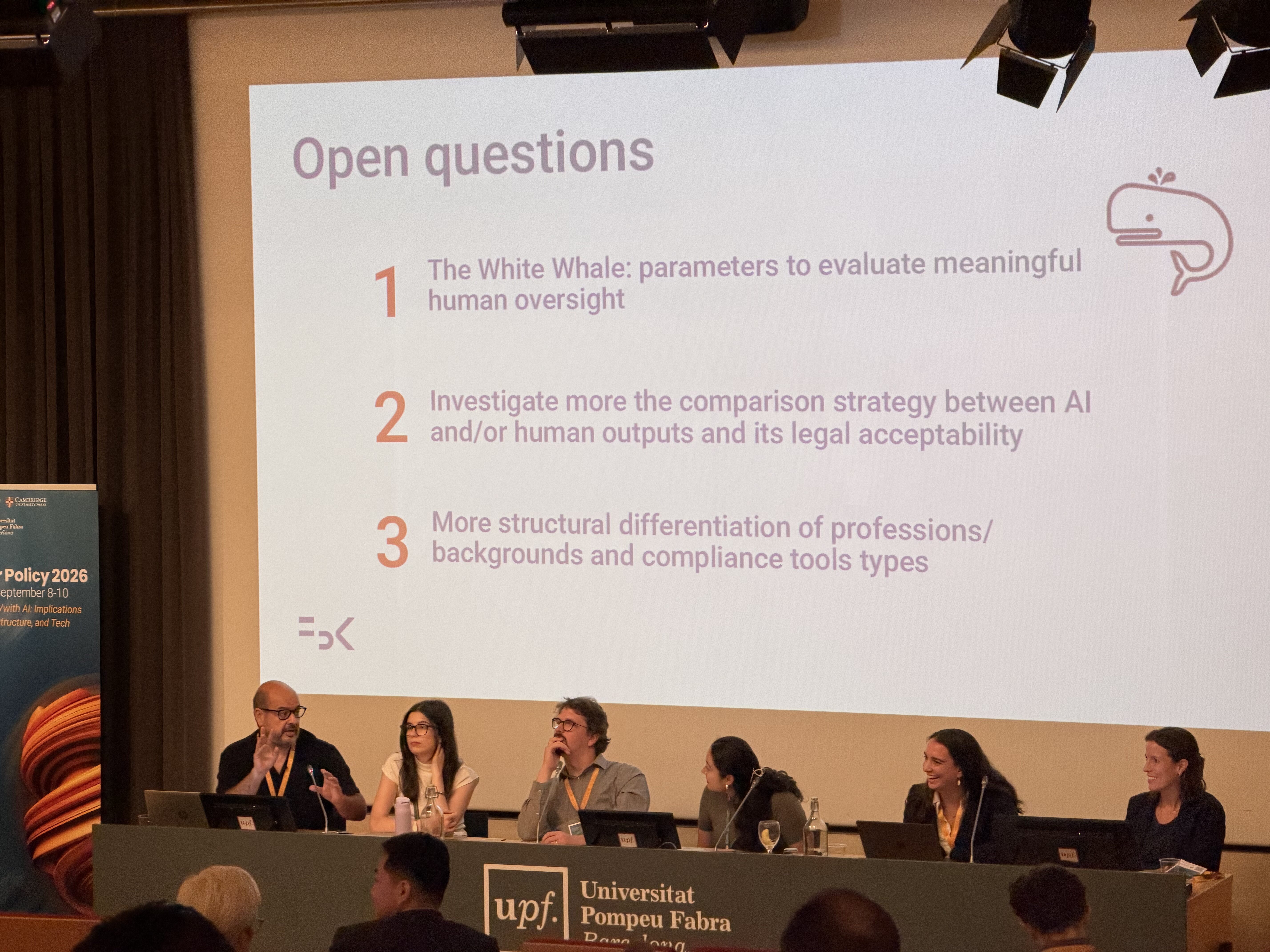
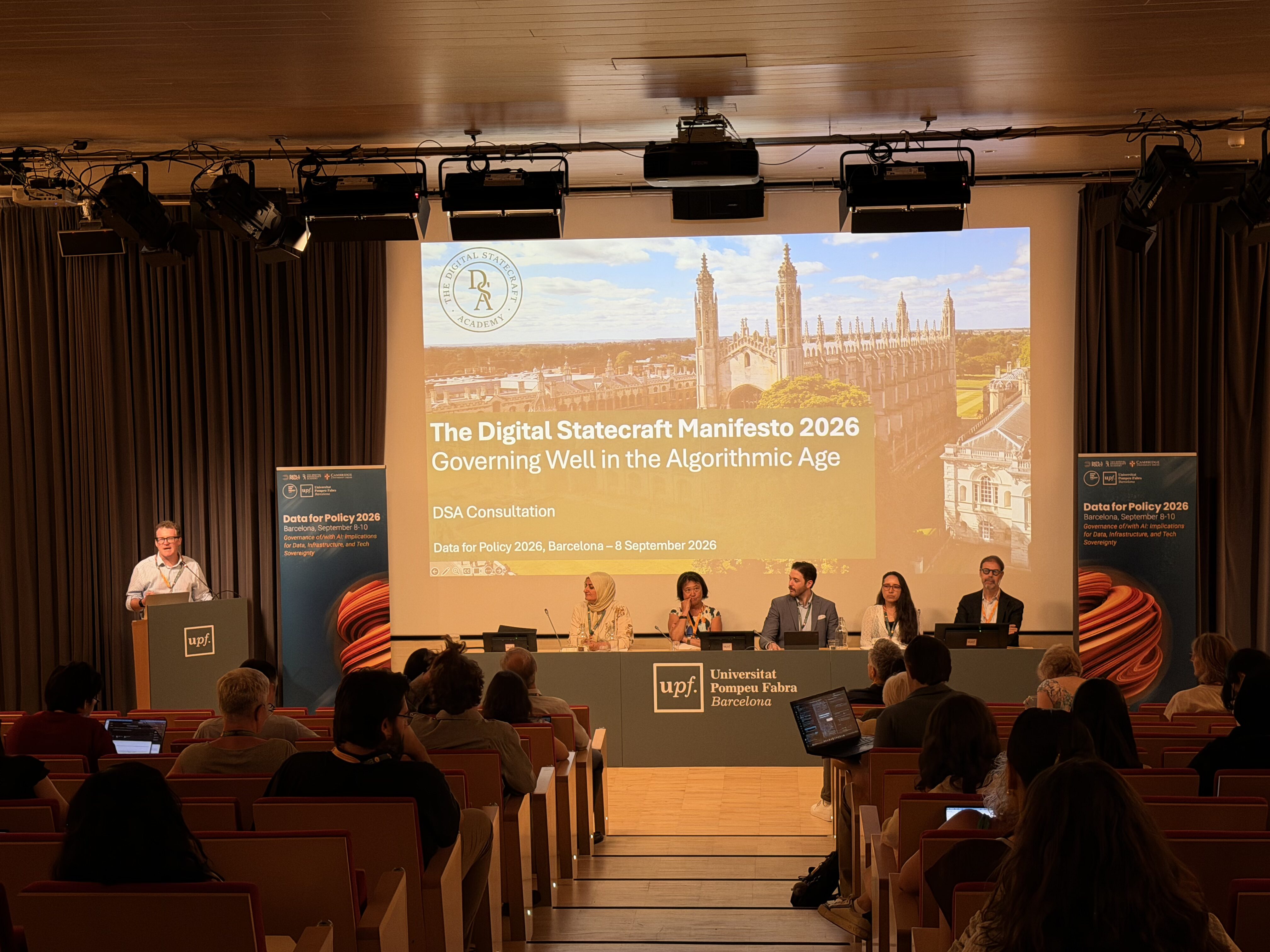
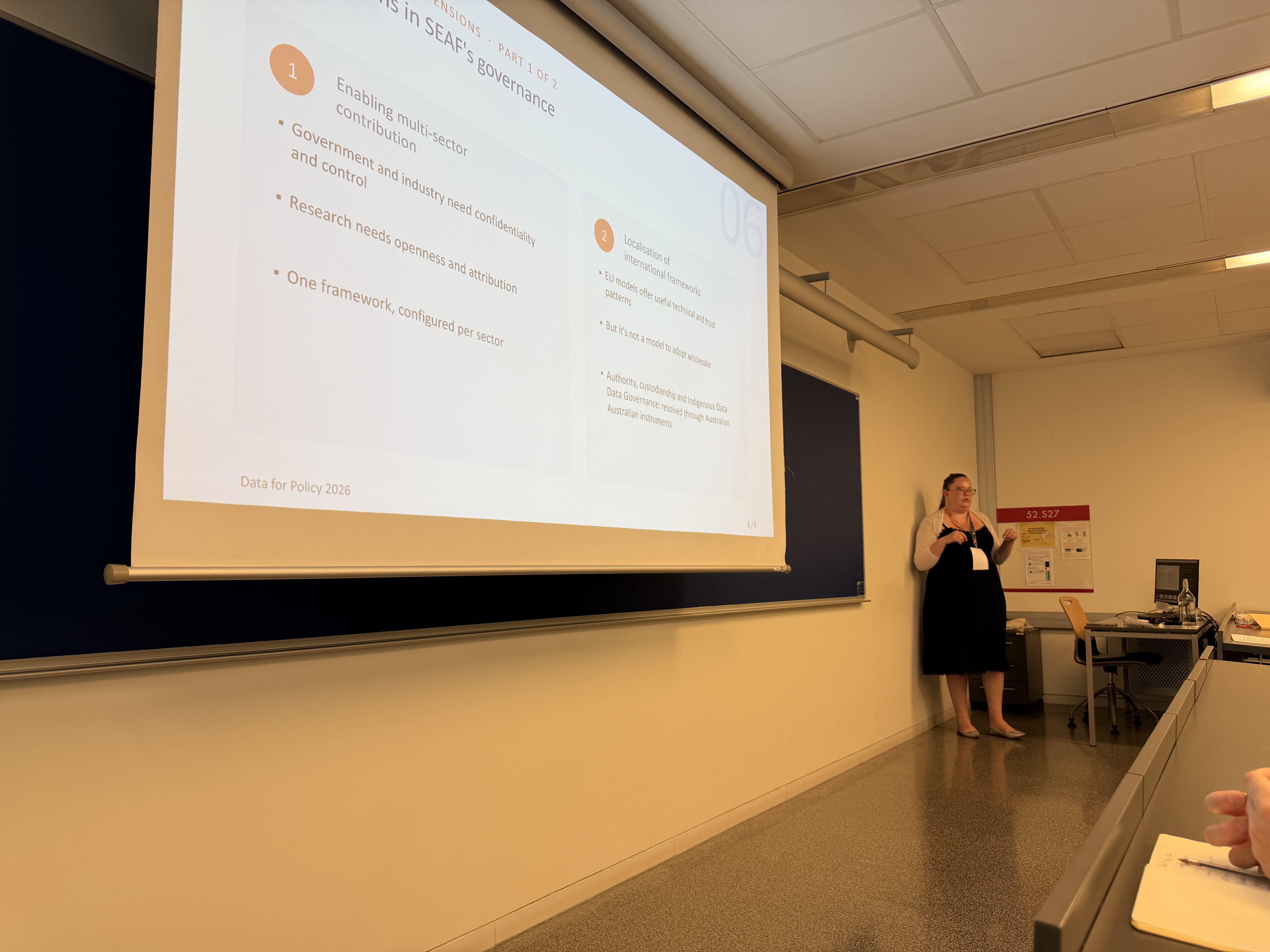
The tenth edition of the Data for Policy conference was held on 8–10 September at Universitat Pompeu Fabra in Barcelona. The theme, “Governance of/with AI: Implications for Data, Infrastructure, and Tech Sovereignty,” framed three days of discussion on how AI is reshaping governance and decision making, and on what responsible and evidence-based responses to that shift look like in practice.
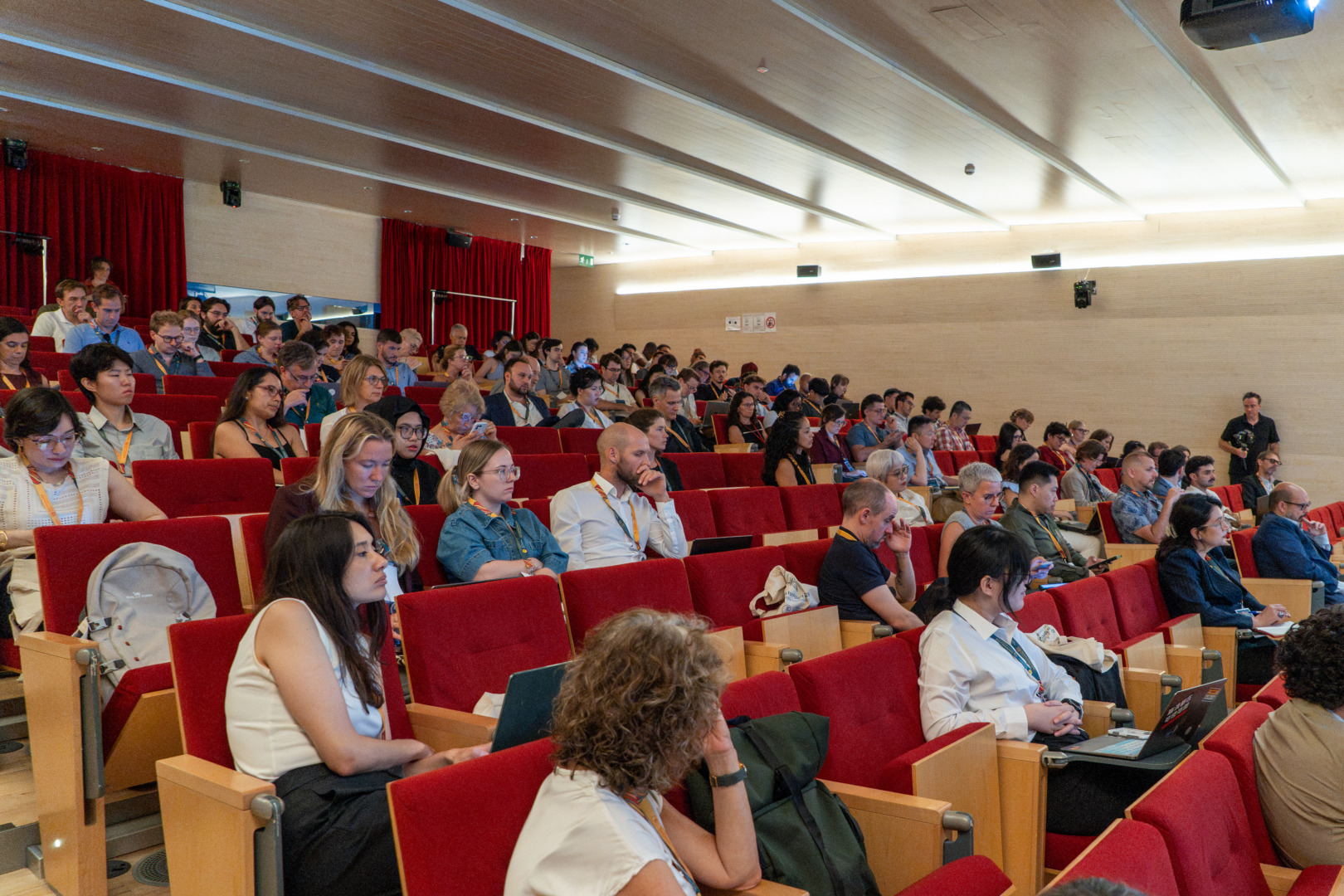
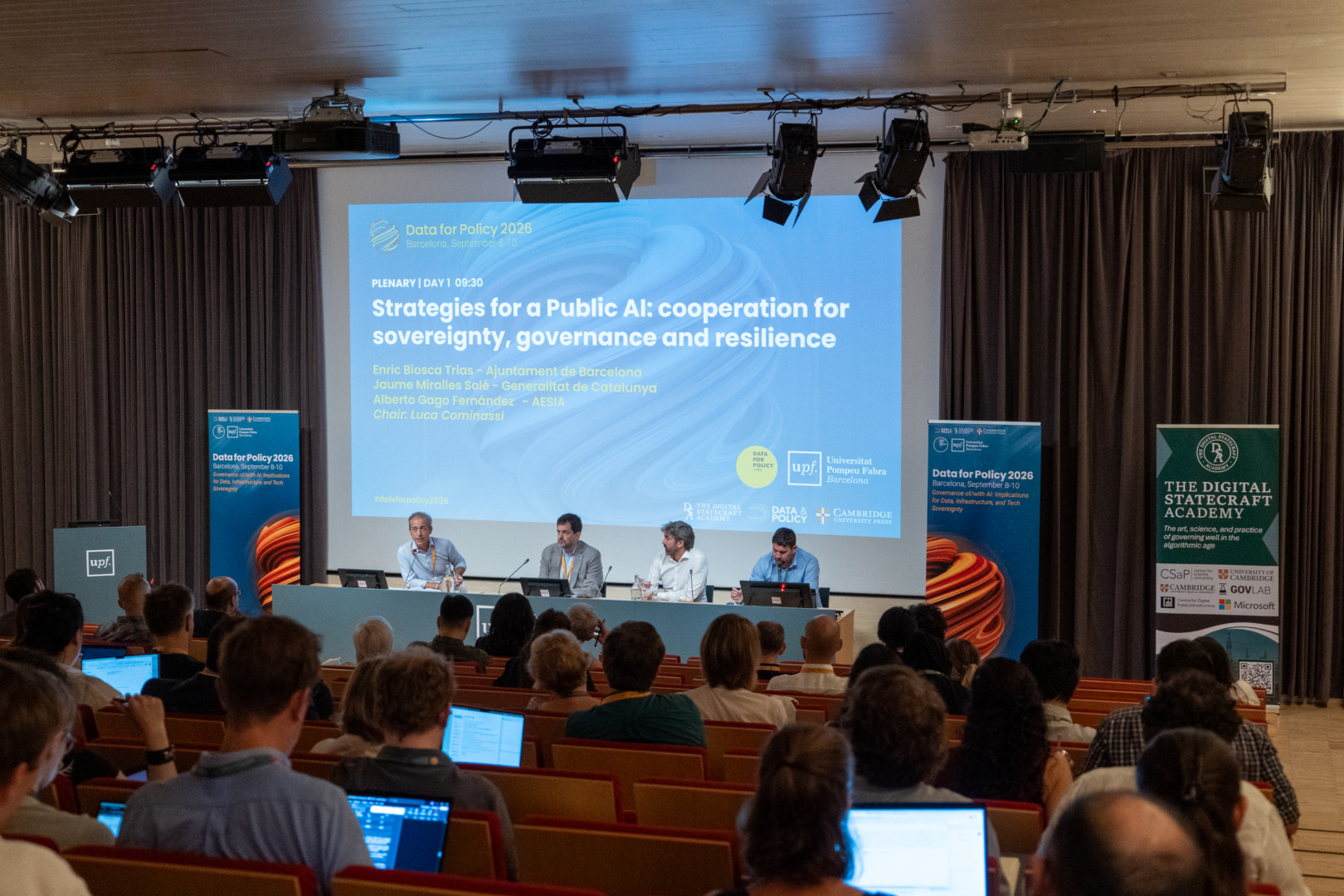
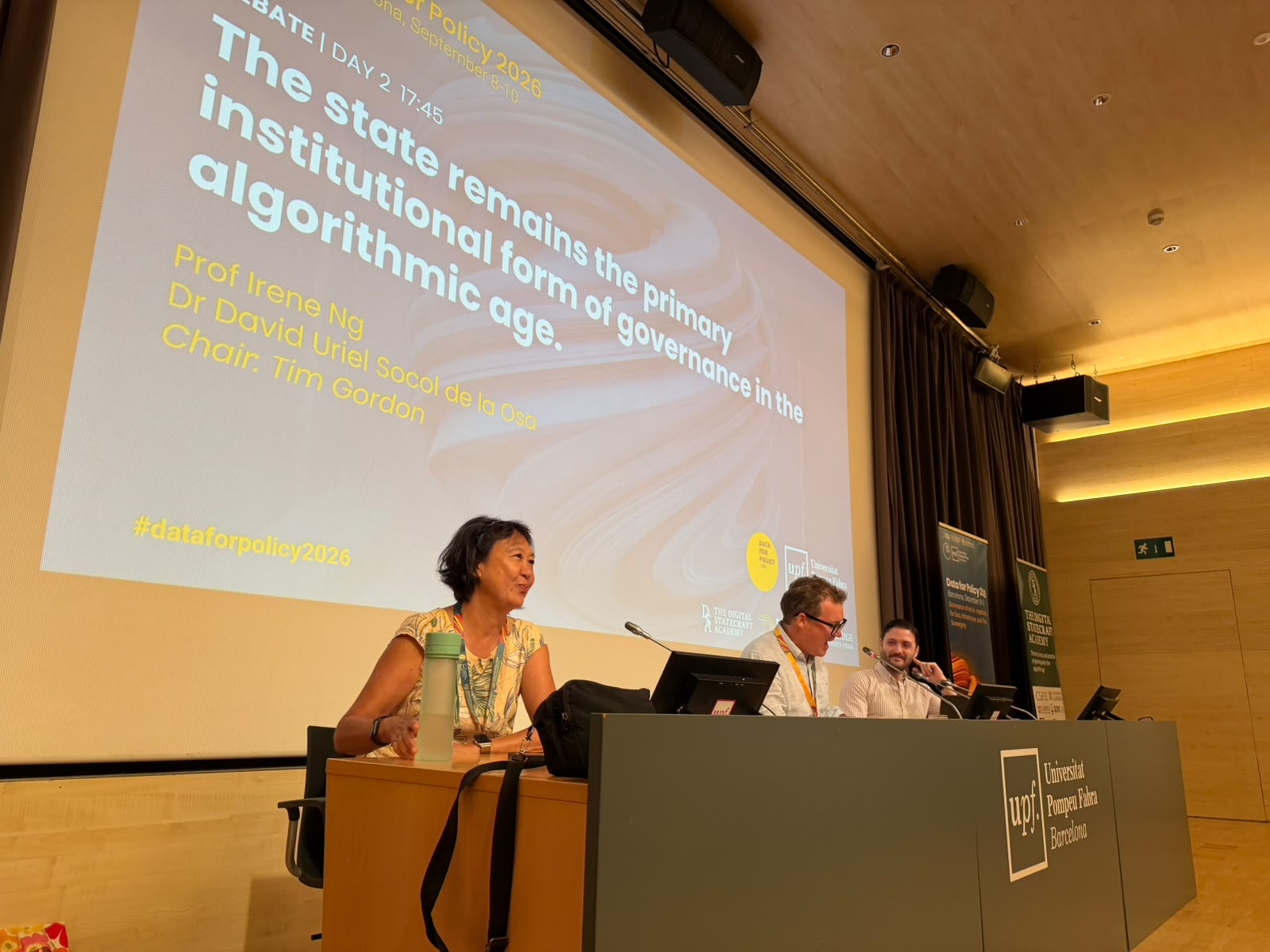
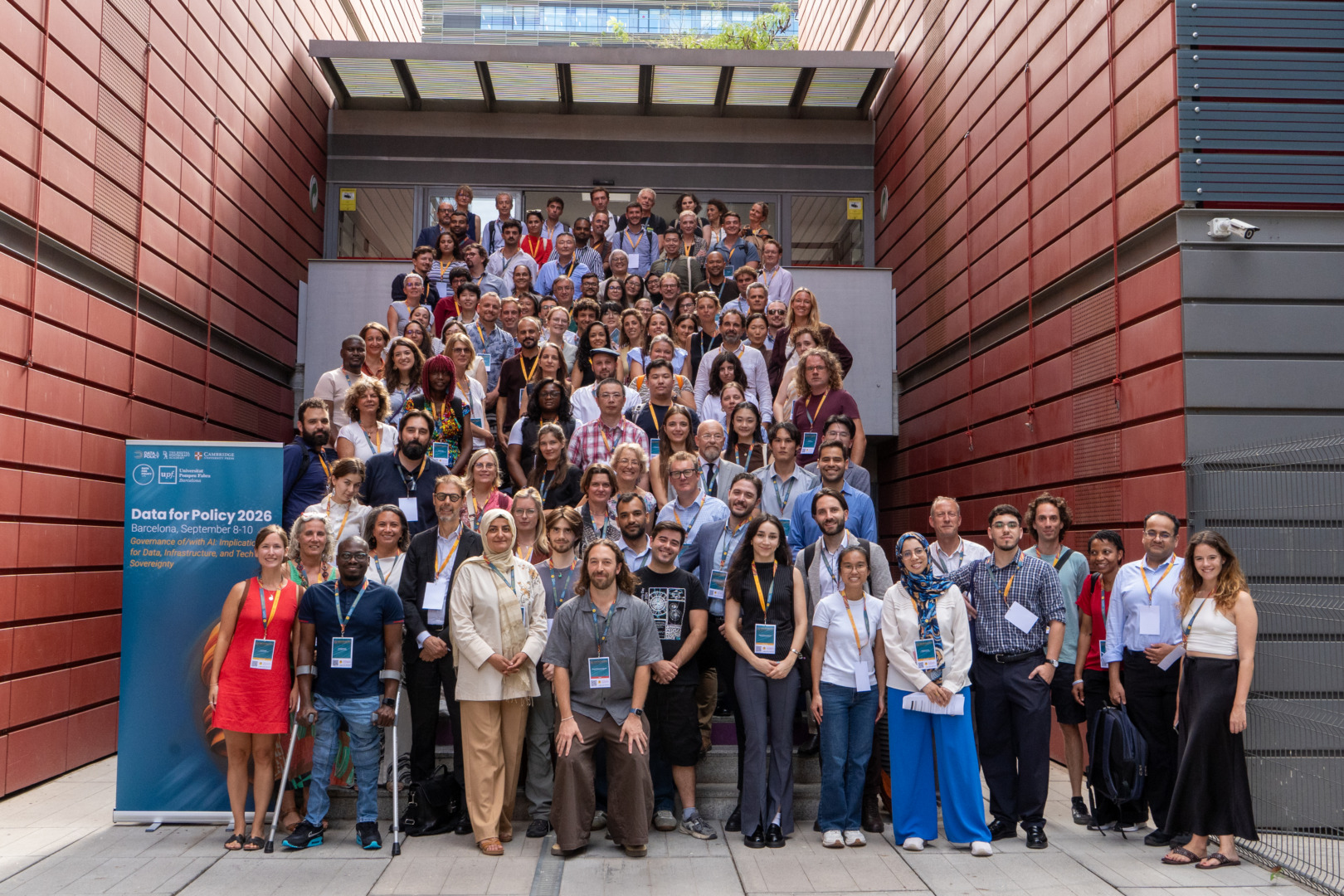
The conference brought together around 200 participants from 44 countries. The programme featured 123 individual research contributions, alongside 5 keynote sessions, 4 plenary sessions, and 2 Digital Statecraft debates. Contributions were selected through an open call for abstracts, full papers, and panel proposals, followed by a rigorous peer-review process.
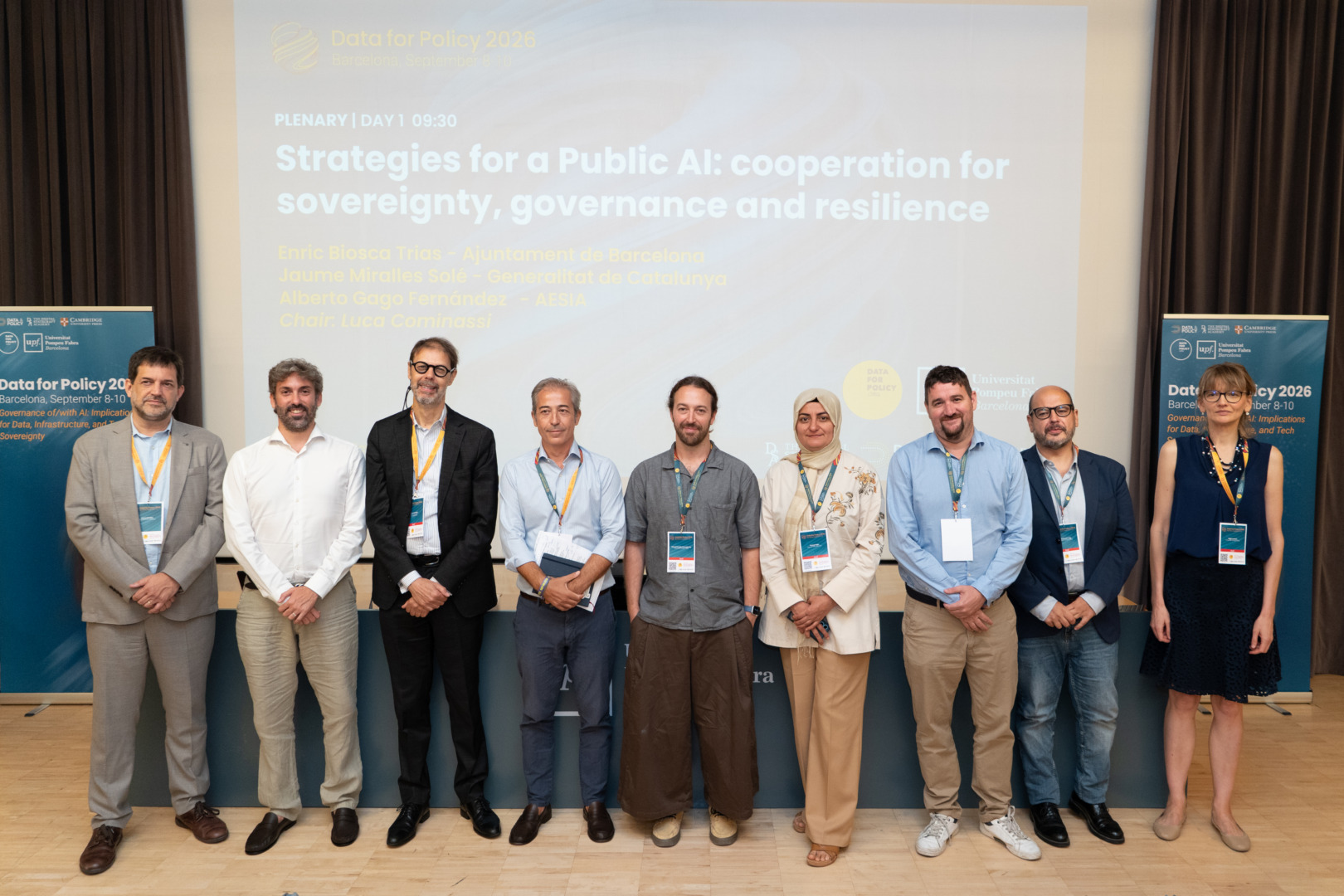
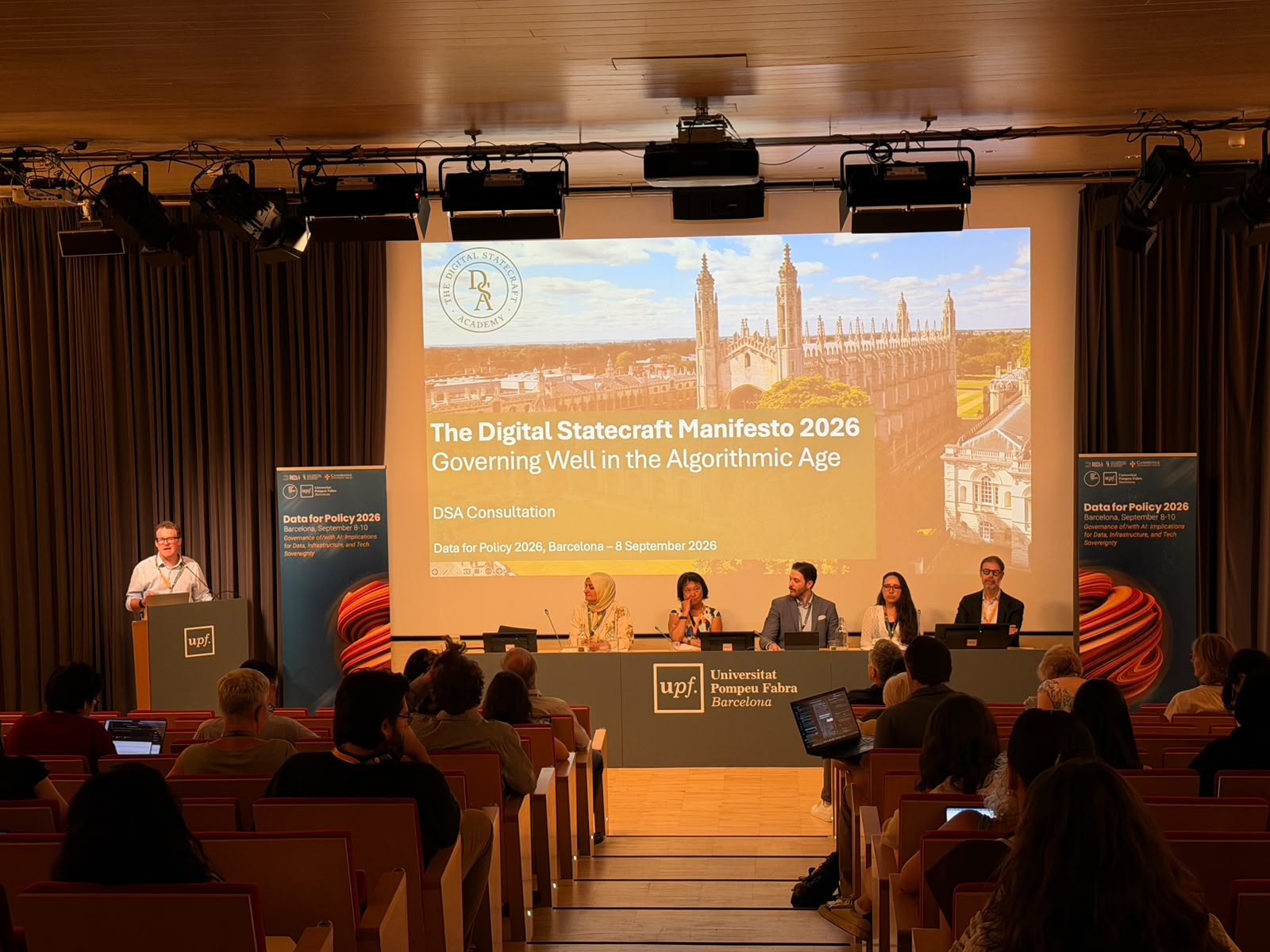
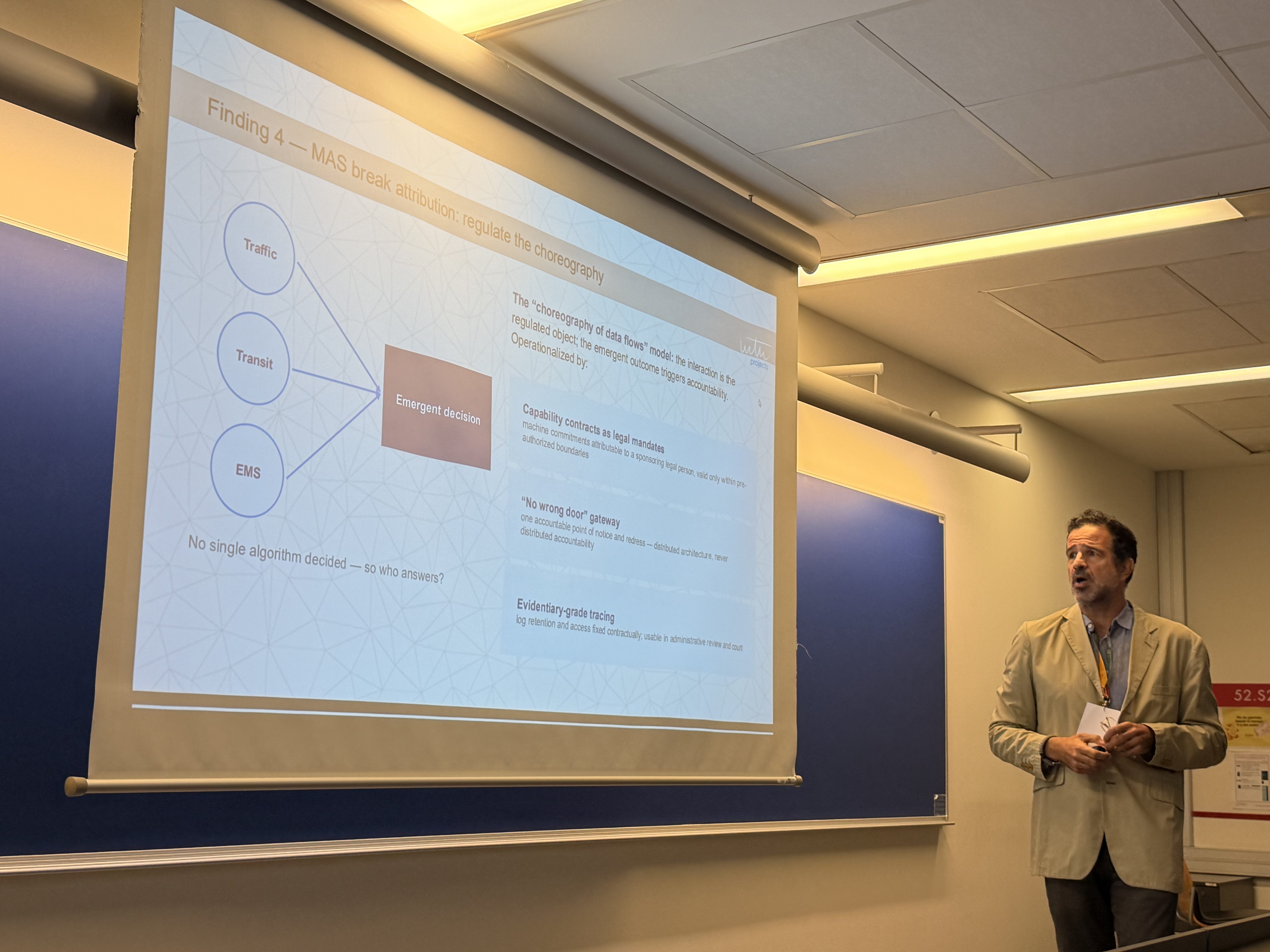
Discussions were organised around six standard tracks: Digital & Data-driven Transformations in Governance; Technologies & Analytics; Policy & Literacy for Data; Ethics, Equity, and Trustworthiness; Algorithmic Governance; and Global Challenges and Dynamic Threats, alongside a special track convened by The Digital Statecraft Academy (DSA), “Digital Statecraft: From Principles to Practice.” Curated sessions addressed tech diplomacy and resilience, tech sovereignty, responsible AI, strategies for a public AI, and the impact of AI in the public commons. Presentations covered a wide range of national and institutional contexts, examining questions of supervision and oversight, public-sector capacity, data and compute infrastructure, and the social and legal consequences of AI deployment.
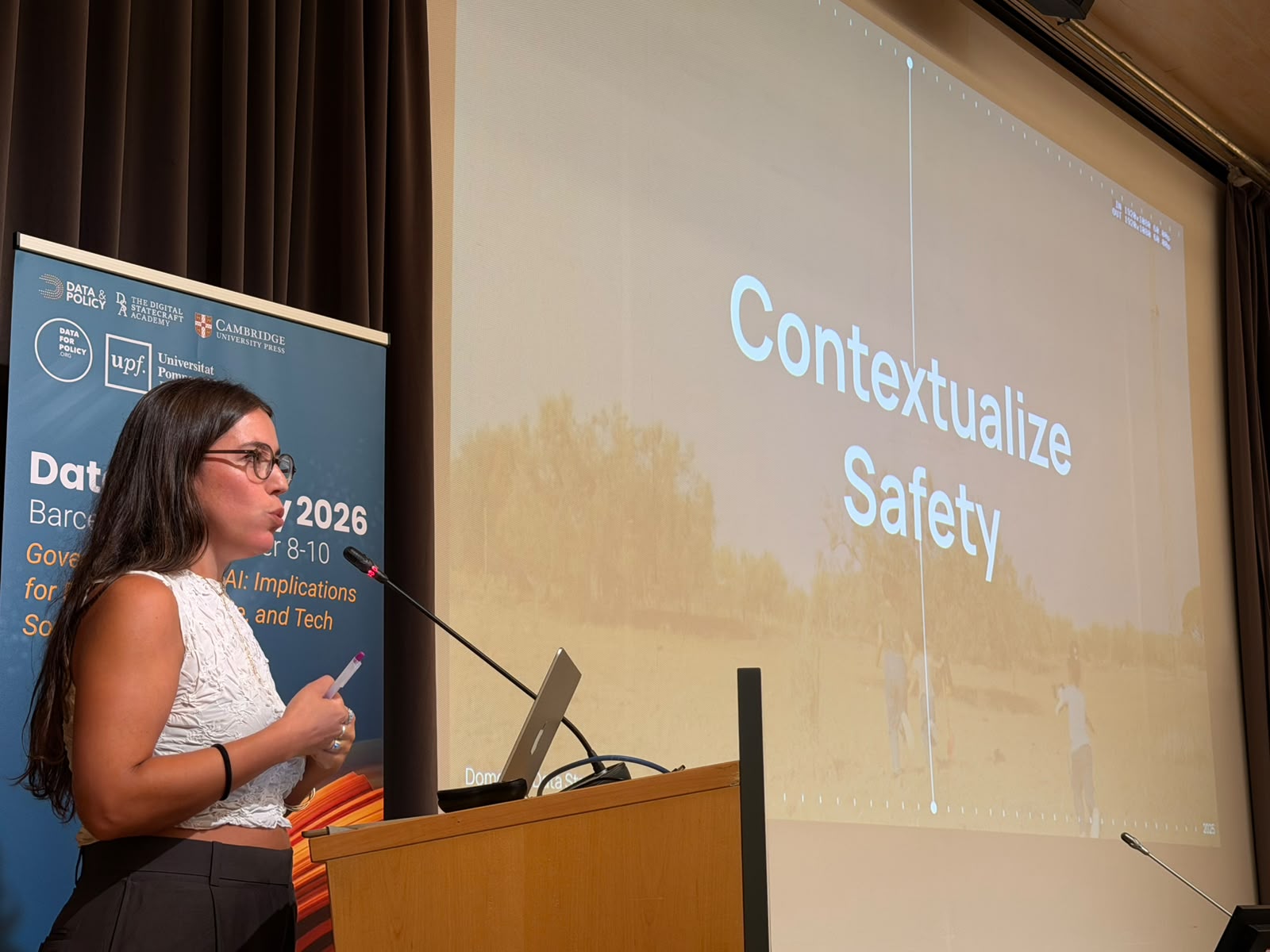
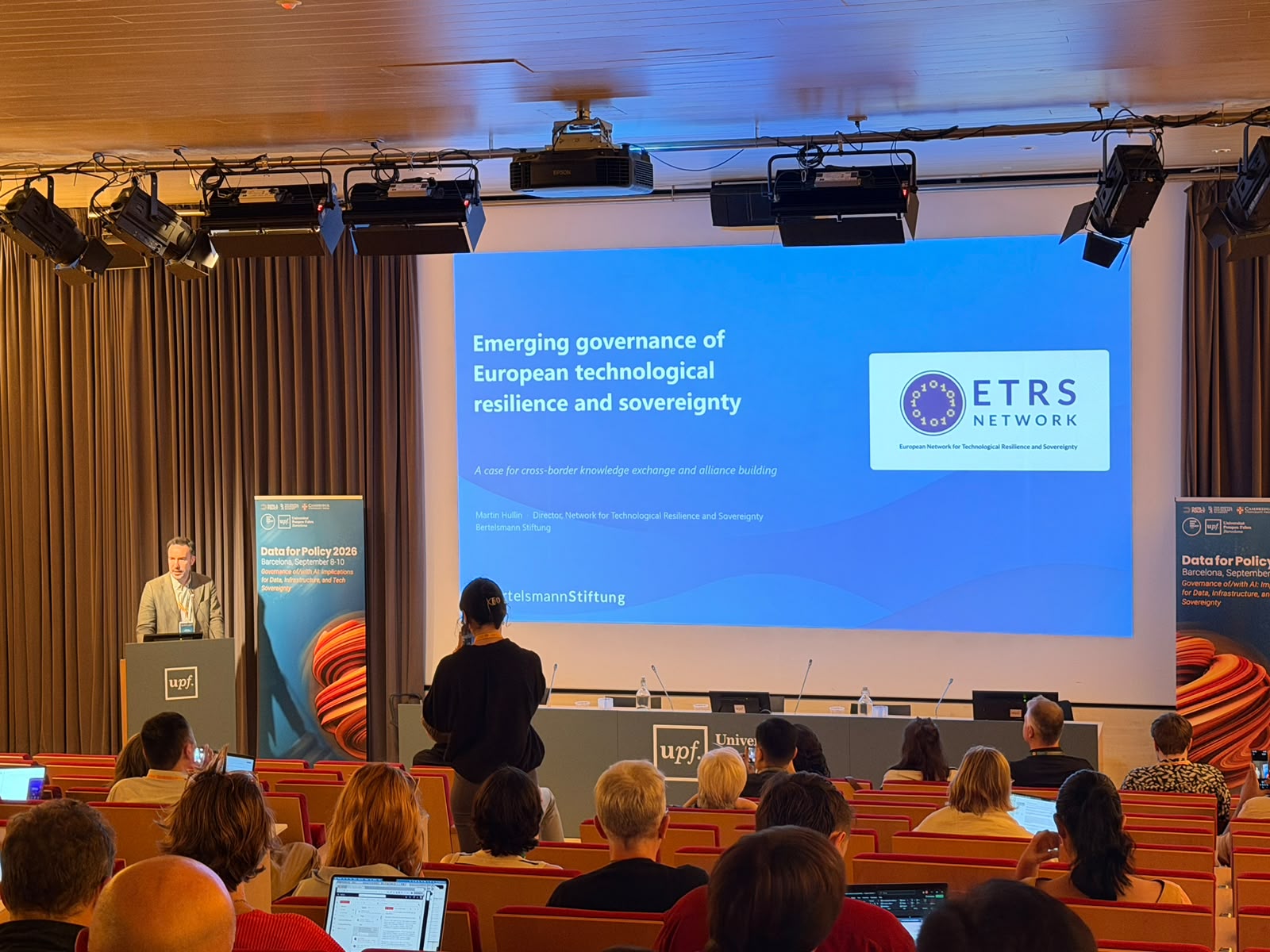
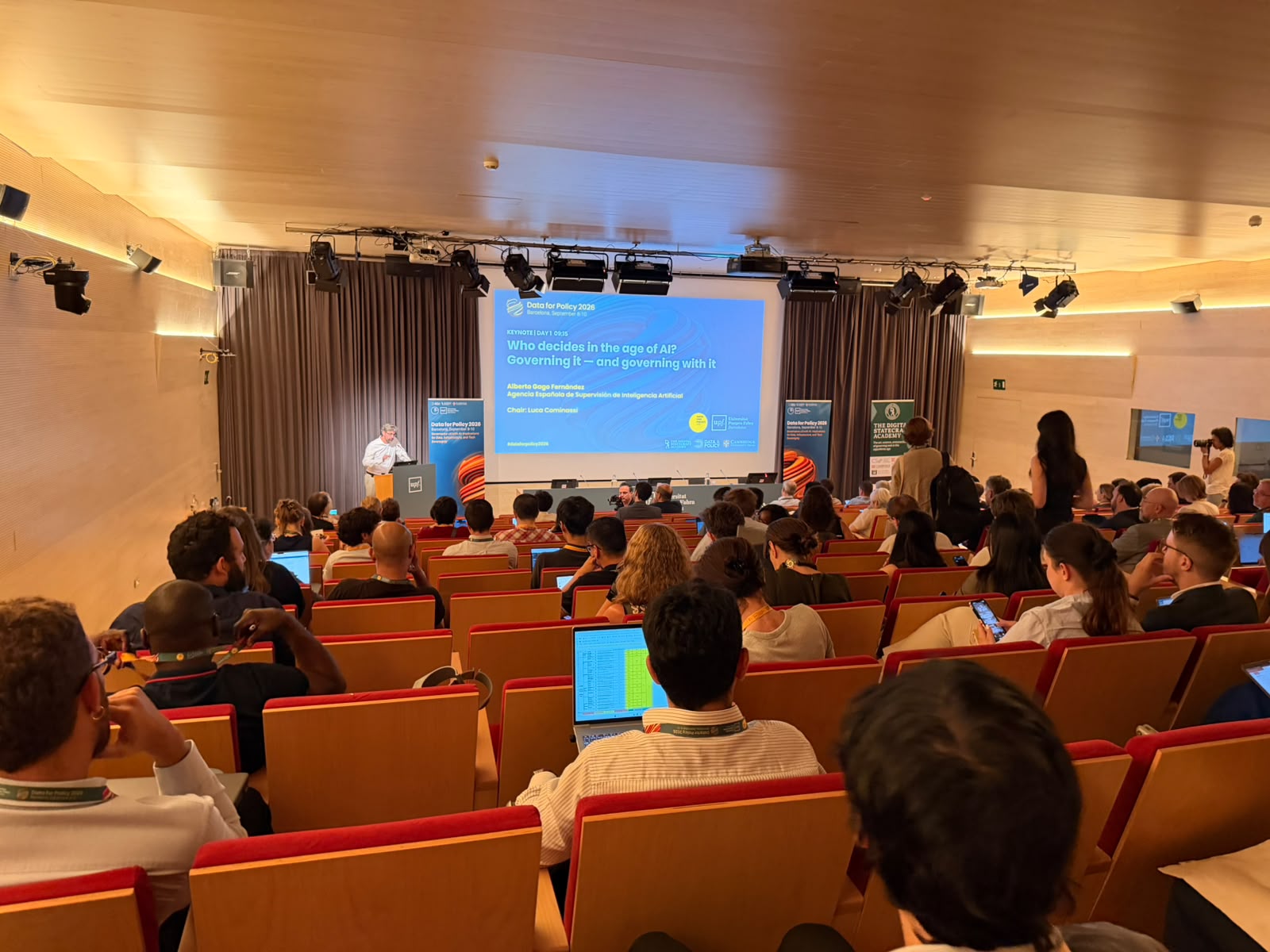
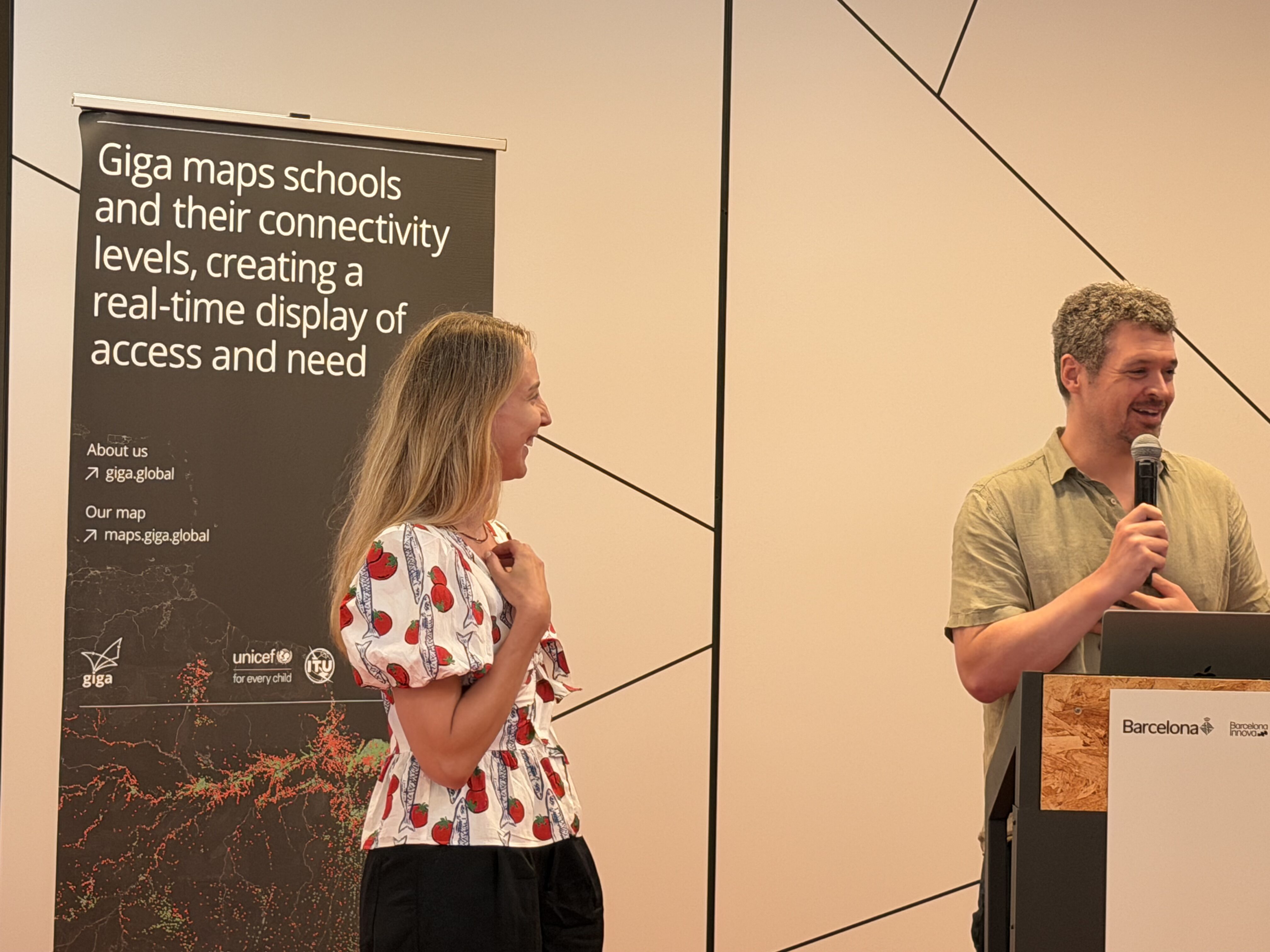
The keynote programme featured Alberto Gago Fernández, Director of AESIA, the Spanish Agency for the Supervision of Artificial Intelligence; Stefano Maria Iacus, Scientific Project Officer at the European Commission’s Joint Research Centre; Martin Hullin, Director of the Network for Technological Resilience and Sovereignty at Bertelsmann Stiftung, Martina Nadal, Partner, COO, and Head of Social Impact at Domestic Data Streamers, and Maria Antonia Bravo Reyes, Growth & Delivery Lead, UNICEF Giga.
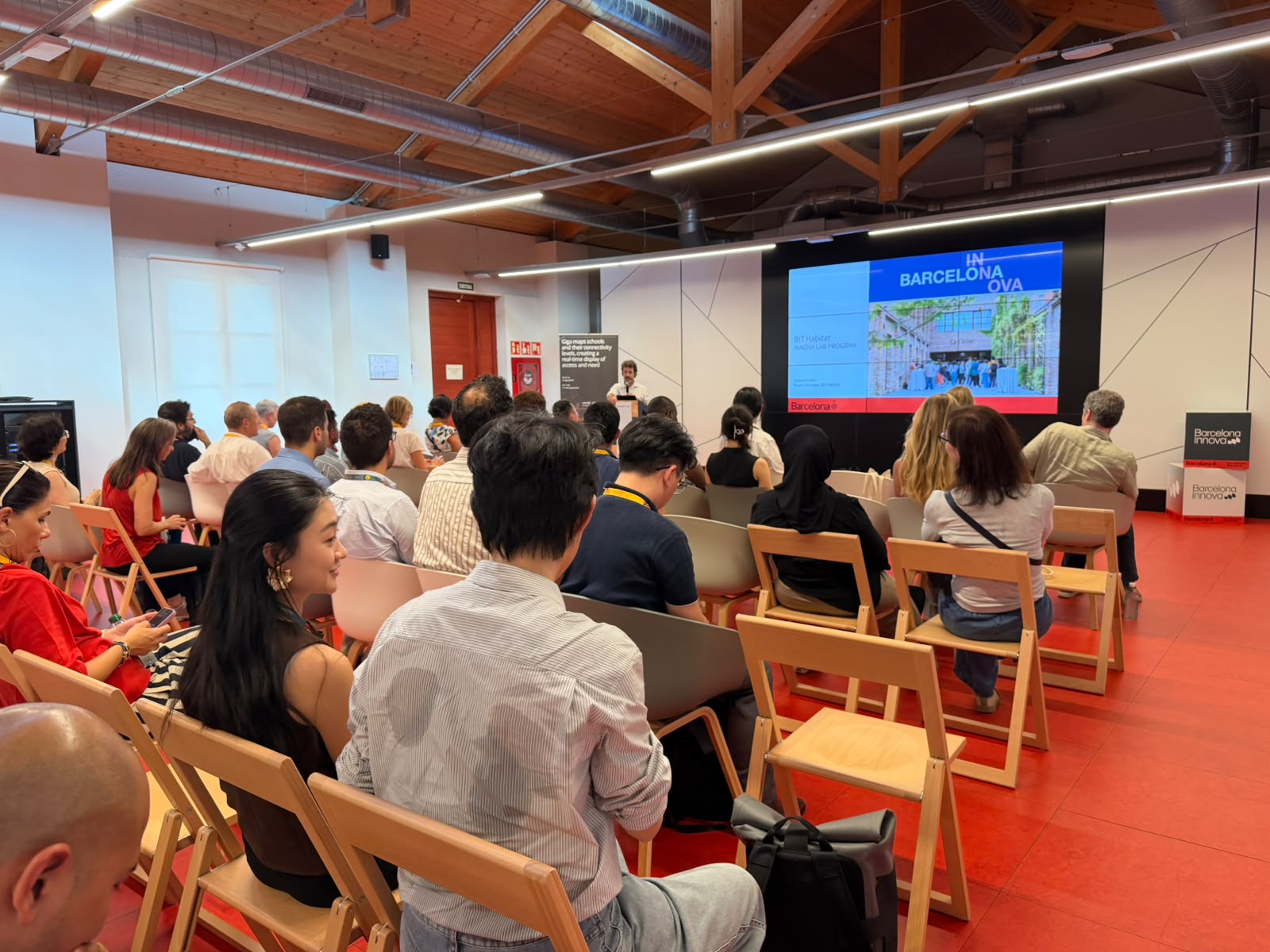
Ahead of the main programme, participants joined site visits on 8 September to the Barcelona Supercomputing Center (BSC-CNS) and to Ca l’Alier, offering a first-hand view of the infrastructure and urban innovation work taking place in the host city.
The conference chairs underlined the value of transdisciplinary work across engineering, the humanities, and the social sciences, as a basis for governing AI responsibly.
We are also pleased to continue our conference–journal integrated review process with Data & Policy, the peer-reviewed, open-access journal published by Cambridge University Press. Full papers submitted to the conference were reviewed for both venues, and authors presenting extended abstracts are invited to submit full papers to the journal.
This edition is the result of a year-long collaborative process, from the call for papers through peer review to the final programme. We extend our sincere thanks to the Local Chairs: Manuel Portela, Carlos (Chato) Castillo , Vladimir Estivill-Castro, Migle Laukyte and Antoni Rubi-Puig of Universitat Pompeu Fabra and to the Conference General Chairs, Zeynep Engin (Data for Policy CIC), Jon Crowcroft (University of Cambridge and The Alan Turing Institute), and Stefaan Verhulst (The GovLab, New York University and The Data Tank). Our thanks also go to the programme committees and to the volunteer team whose work was central to delivering this edition.
We are grateful to our partner organisations; Cambridge University Press, the Data & Policy journal, The Digital Statecraft Academy, whose support enabled wider participation and helped ensure that equity and inclusion remain core to the Data for Policy mission.
As conversations continue beyond Barcelona, Data for Policy 2026 reaffirmed the value of evidence-based policymaking, international collaboration, and open debate in shaping how AI is governed.
The Conference Book of Abstracts for Data for Policy 2026 has been published on Zenodo, providing access to all contributions presented at the event.
For further information, please contact team@dataforpolicy.org.
Keynote/Plenary Session Speakers
- Alberto Gago Fernández – Director of Spanish Agency for the Supervision of Artificial Intelligence (AESIA)
- Stefano Iacus – Scientific Project Officer, European Commission — Joint Research Centre
- Martin Hullin – Director, Network for Technological Resilience & Sovereignty, Bertelsmann Stiftung
- Enric Biosca – Chief Data Technology Officer, Barcelona City Council
- David Cabo – Co-Director / CTO, Civio
- Maria Eugenia Cardello – Research Engineer, Barcelona Supercomputing Center
- Luca Cominassi – External Consultant, Barcelona Supercomputing Center
- Atia Cortes – Established Researcher, Barcelona Supercomputing Center
- Elena Fuetsch – UNICEF Giga
- Stina Heikkila – Project Coordinator – Citizen Science, Eurocities
- Nil Homedes – Director at Decidim
- Pablo Jimenez Arandia – Investigative reporter and freelance journalist
- Toni Lorente – Director of European AI Governance, The Future Society
- Joan Masó – Principal Investigator, CREAF
- Jaume Miralles – Director General for Artificial Intelligence, Efficiency and Data in Public Administration of the Government of Catalonia (DGIA)
- Martina Nadal – Partner, COO, and Head of Social Impact at Domestic Data Streamers
- Paula Rodriguez Müller – Scientific Officer at European Commission Joint Research Centre (JRC)
- Maria Antonia Bravo Reyes – Growth & Delivery Lead, UNICEF Giga
- Albert Sabater – Director of the Observatory of Ethics in Artificial Intelligence of Catalonia (OEIAC)
- Sara Thabit – Project Officer at European Commission Joint Research Centre (JRC)
- Liam Wyatt – Senior Manager of Technology Partnerships at the Wikimedia Foundation