Data for Policy 2026 · 10th Edition
Conference Overview
Governance of / with AI: Implications for Data, Infrastructure, and Tech Sovereignty
// Programme may be subject to change at short notice. Tap a session to view papers, panellists and chairs.
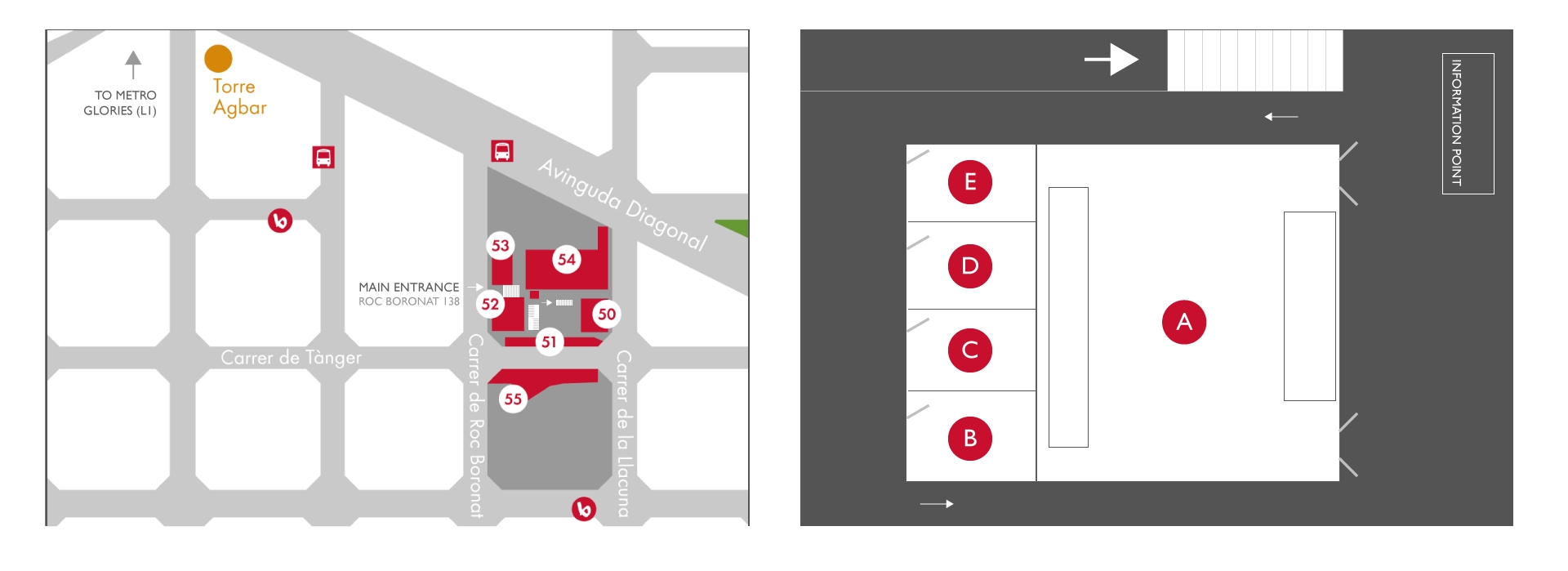
- Participatory AI and Public PerceptionPS A.1 · Auditorium
- Technologies for AI GovernancePS B.1 · Room B
- DS Special Track Session: Adaptive InstitutionsPS C.1 · Room C
A.1 — Participatory AI and Public Perception · Auditorium
Chair: Dr Tuba Bircan, Vrij Universiteit Brussel
- “Paving the Way to Participatory Public Engagement on AI”; Susan Oman – The University of Sheffield, Tim Davies – Connected By Data, Canning Malkin – ISWE, Octavia Field Reid – Ada Lovelace Institute, Erin Mccloskey – University of Liverpool, and Emily Rempel – University of Liverpool. (Submission #175)
- “Public feeling on AI: taking an inequalities lens to the evidence”; Susan Oman – The University of Sheffield. (Submission #215)
- “From Principles to Longitudinal AI Governance: An Evidence-Based Framework for Continuous Oversight”; Marisa Vasconcelos – Computer Science Department, Universidade Federal de Minas Gerais, Belo Horizonte, Minas Gerais, Brazil, Ramon G. Pereira – Computer Science Department, Universidade Federal de Minas Gerais, Belo Horizonte, Minas Gerais, Brazil, Luís Eduardo Brito – Computer Science Department, Universidade Federal de Minas Gerais, Belo Horizonte, Minas Gerais, Brazil, Michele A. Brandão – Computer Science Department, Universidade Federal de Minas Gerais, Belo Horizonte, Minas Gerais, Brazil, Humberto T. Marques-Neto – Computer Science Department, Universidade Federal de Minas Gerais, Belo Horizonte, Minas Gerais, Brazil, Jussara M. Almeida – Computer Science Department, Universidade Federal de Minas Gerais, Belo Horizonte, Minas Gerais, Brazil, Ana Paula Couto da Silva – Computer Science Department, Universidade Federal de Minas Gerais, Belo Horizonte, Minas Gerais, Brazil, Wagner Meira Jr. – Computer Science Department, Universidade Federal de Minas Gerais, Belo Horizonte, Minas Gerais, Brazil, and Virgílio Almedia – Computer Science Department, Universidade Federal de Minas Gerais, Belo Horizonte, Minas Gerais, Brazil. (Submission #DAP-2026-0231)
B.1 — Technologies for AI Governance · Room B
Chair: Carlos (Chato) Castillo – Universitat Pompeu Fabra
- “HILDA Analyst: Governance Practices for Responsible AI-Assisted Policy Analysis”; Ujjwal Kc – Melbourne Institute of Applied Economic and Social Research, Taylor Ey – Melbourne Institute of Applied Economic and Social Research and Jan Kabatek – Melbourne Institute of Applied Economic and Social Research. (Submission #26)
- “The UK Parliament Evidence Tracker: An AI-Powered Tool for Monitoring Research Evidence Use in Legislative Debate”; Afagh Mulazadeh – University College London, Laurence Brandenberger – University of Zurich, Sophia Schlosser – University of Zurich, Luis Salamanca – Swiss Data Science Center, ETH Zurich, Yifei Yuan – Swiss Data Science Center, ETH Zurich, Andrew Plume – University College London and Research Collaboration Unit, Elsevier and Chris Tyler – University College London. (Submission #181)
- “From Policy Questions to Experimental Design”; Chloe Gros – Leiden University, eLaw – Center for Law and Digital Technologies, Eduard Fosch-Villaronga, – Leiden University, eLaw – Center for Law and Digital Technologies, Mohammed Raiz Shaffique – Leiden University, Marie Schwed Shenker – Leiden University, eLaw – Center for Law and Digital Technologies, Matteo Lancini – University of Brescia, Department of Medical-Surgical Specialties, Radiological Sciences and Public Health, Giorgia Gatto – University of Brescia, Department of Medical-Surgical Specialties, Radiological Sciences and Public Health, Roy de Kleijn – Leiden University, Faculty of Social and Behavioural Sciences, Erik Prinsen – Roessingh, Center for Rehabilitation & University of Twente and Giulia Ramella – Swiss Federal Institute of Technology, EPFL. (Submission #145)
- “Advancing Equity in AI for Health: A Living Global Policy Repository.” ; Claudia Lopes – United Nations University. (Submission #142)
C.1 — DS Special Track Session: Adaptive Institutions · Room C
Chair: Dr David Uriel Socol de la Osa – Hitotsubashi University
- Human-oriented architectures for governing the algorithmic age”; Viviana Bastidas – University of Cambridge, Atsushi Tozawa – University of Cambridge and Jennifer Schooling – Anglia Ruskin University. (Submission #147)
- “Boundary objects for re-institutionalising the algorithmic state”; Sem Nouws – Delft University of Technology and Marijn Janssen – Delft University of Technology. (Submission #221)
- “From Spatial Data to Policy Action: Uzbekistan’s Experience with Location Intelligence and Outcome-Oriented Governance” ; Aziza Umarova – Head of Zero Bureaucracy and Innovation Office, Agency for Strategic Development and Reforms, and Farhod Omonov – Data Scientist. (Submission #223)
- Accountability and TransparencyPS A.2 · Auditorium
- Tax & AI-Driven lawPS B.2 · Room B
- DS Special Track Session: Case Studies Across JurisdictionsPS C.2 · Room C
- Data spaces and Decentralised MechanismsPS D.2 · Room D
A.2 — Accountability and Transparency · Auditorium
Chair: Atia Cortes, Barcelona Supercomputing Center
- “Adequate AI explainability requirements: Reconciling tensions with secrecy, security, and accuracy” ; Marie-Claire Najjar – European University Institute. (Submission #126)
- “How to Use Open Data to Improve Transparency, Efficiency, and Accountability of a Public Institution in light of the European Union Framework” ; Gabriele Massaro – Fondazione Etica and Davide Pasquale Cacozza – Fondazione Etica. (Submission #30)
- “Transparency for Whom? Procedural Transparency and User Responsibilisation in AI Governance of Banking Services.” ; Yuening Li – University College Dublin and Aphra Kerr – University College Dublin. (Submission #99)
B.2 — Tax & AI-Driven law · Room B
Chair: Dr Susan Oman, The University of Sheffield
- “AI and Jurisprudential Analysis in Tax Law” ; Eleonora Lozano Rodriguez – Universidad de los Andes. (Submission #222).
- “A legal system of prevention rather than punishment.” ; Sandra Felizia – Universidad Nacional de Rosario/Universidad Abierta Interamericana, Alejandro Laje – Universidad Abierta Interamericana, Gerónimo Martinez – Universidad Abierta Interamericana, Carlos Molina-Jimenez – Department of Computer Science and Technology, University of Cambridge, Hazem Danny Al-Nakib – The Centre for ReDecentralisation (CRDC), University of Cambridge and Jon Crowcroft – Department of Computer Science and Technology, University of Cambridge. (Submission #220)
- “Normative Compliance by Design in High-Risk AI Systems: The case of the Judicial Assistant AI-Insolvency.” ; Mireia Artigot Golobardes – Universitat Pompeu Fabra. (Submission #136)
C.2 — DS Special Track Session: Case Studies Across Jurisdictions · Room C
Chair: Tim Gordon – Co-Founder, The Digital Statecraft Academy
- “Regulatory Reform and a Digital Public Good at the Goa Industrial Development Corporation.” ; Kartik Akileswaran – Growth Teams, Pravimal Abhishek – Indian Administrative Service (IAS) and Smriti Iyer – Better Purpose Collective. (Submission #116)
- “Digital Arang: Crafting Subnational AI Authority Through Indigenous Knowledge Governance in Kalinga, Philippines” – Marine Collins Ragnet – New York University, Tala Bautista – Kalinga State University and Katerina Siira – New York University. (Submission #100)
D.2 — Data spaces and Decentralised Mechanisms · Room D
Chair: Dr Claudia Abreu Lopes, United Nations University
- “Insights into the Bulgarian Data Space Program: A Method for Identifying Viable Data Spaces” ; Marcel Altendeitering – Fraunhofer ISST and Anna Maria Schleimer – Fraunhofer ISST. (Submission #DAP-2026-0200)
- “Portable principles, local conditions: translating data space governance outside the EU.” ; Viivi Lähteenoja – 1001 Lakes Oy, University of Helsinki, Amber Daniels – The Western Australian Biodiversity Science Institute (WABSI), Chris Gentle – The Western Australian Biodiversity Science Institute (WABSI) and Marko Turpeinen – 1001 Lakes Oy, Aalto University. (Submission #214)
- Generative and Agentic AI ImpactPS A.3 · Auditorium
- Economies of AIPS B.3 · Room B
- DS Special Track Session: State & CitizenshipPS C.3 · Room C
- Funding AIPS D.3 · Room D
A.3 — Generative and Agentic AI Impact · Auditorium
Chair: Dr Migle Laukyte, Universitat Pompeu Fabra
- “Generative AI, Policymaking, and Disability Bias” ; Rachel Elena Tng – Nanyang Technological University, Wee Kim Wee School of Communication and Information, Kok Khiang Lim – Nanyang Technological University, Wee Kim Wee School of Communication and Information, Kuansong Victor Zhuang – Nanyang Technological University, Wee Kim Wee School of Communication and Information, and Chei Sian Lee – Nanyang Technological University, Wee Kim Wee School of Communication and Information. (Submission #DAP-2026-0227)
- “A Governance Gap in Agentic AI: Operationalising Data Protection by Design at the Tool-Dispatch Boundary” ; Mays Al-Naday – University of Essex, Lina Barakat – University of Essex, Sri Teja CHILAKAMARRI – University of Essex, Institute for Analytics and Data Science; Attwells Solicitors, Laura Harrington-Rutterford – Attwells Solicitors, Haralambos Mouratidis – University of Essex, Arpan Abani Sarkar – Independent Researcher. (Submission #DAP-2026-0221)
- “AI Epistemic Governance: A Conceptual Framework for Reliable and Legitimate AI-Augmented Decision-Making.” ; Silvio Menezes – IPAM Lisboa. (Submission #52)
B.3 — Economies of AI · Room B
Chair: Dr Federico Bartolomucci, Politecnico di Milano, Department of Management Engineering
- “Leveraging Rules as Code for a More Transparent and Efficient Global Economy.” ; Jessica Rapson – University of Oxford.(Submission #41)
- “Transparent policy evaluation through causal machine learning: An application to SME digital subsidies” ; Ana Garcia-Bernabeu – Universitat Politècnica de València, eSMART Research Center, Eugeni Gil-Ocana – Universitat Politècnica de València, eSMART Research Center, and Pablo de Pedraza – Universitat Politècnica de València, eSMART Research Center. (Submission #DAP-2026-0220)
- “Technological Approaches for In-Market Monitoring of AI Systems.” ; Joseph Davis – The University of Sydney. (Submission #24)
C.3 — DS Special Track Session: State & Citizenship · Room C
Chair: Dr Stefaan Verhulst – The GovLab, New York University and The Data Tank.
- “Civic Interplay: Towards New AI Governance Imaginaries.” – Sarah Barns – RMIT. (Submission #148)
- “From Data Protection to Data Property: Why Digital Statecraft Must Reconstitute Rights in Subject-Generated Data.” – Irene Ng – Dataswyft and Susan Wakenshaw – University of Warwick. (Submission #56)
- “Cognitive Democracy as Digital Statecraft: Designing Public Decision Systems for the Algorithmic Age.” – Mohammed Alotaibi – UNU-CRIS. (Submission #27)
- “Beyond Sovereign AI: Interconnected Resilience and the Coordinating State” ; David Uriel Socol de la Osa – Hitotsubashi University. (Submission #155)
D.3 — Funding AI · Room D
Chair: Dr Claudia Abreu Lopes, United Nations University
- “Economic and Policy Determinants of AI Adoption in Developing and Emerging Economies: A Systematic Literature Review Using the TOE Framework” ; Wilson Wong – The Chinese University of Hong Kong, Data Science and Policy Studies; UCL, School of Management and Chyngyz Kumarbek Uulu – The Chinese University of Hong Kong, School of Governance and Policy Science. (Submission #DAP-2026-0235)
- “Critical Infrastructure Alignment to Regional Planning Outcomes: A Governance and Asset Knowledge Graph for Planning-Relevant Evidence in Austria.” ; Lucas Reckhaus – TU Wien Institute of Spatial Planning, Unit- Urban and Regional Research, Franziska Sielker – TU Wien Institute of Spatial Planning, Unit- Urban and Regional Research and Johannes Suitner – TU Wien Institute of Spatial Planning, Unit- Urban and Regional Research. (Submission #146)
- “From Model to Policy: A Communication Tool.” ; Friso Selten – Leiden University and Bram Klievink – Leiden University. (Submission #160)
- Governmental and Public SovereigntyPS A.4 · Auditorium
- Governing Algorithms, Empowering Humans: Institutional Architectures for Accountable AI in Public Policy, Healthcare, and Legal AidPS B.4 · Room B
- DS Special Track Session: Digital InfrastructurePS C.4 · Room C
A.4 — Governmental and Public Sovereignty · Auditorium
Chair: Viivi Lähteenoja, University of Helsinki
- “Demand-side sovereignty: public dialogue and government innovation.” ; Jessica Montgomery – University of Cambridge and Neil D. Lawrence – University of Cambridge. (Submission #66)
- “Beyond Digital Sovereignty: A Health Sovereignty Framework for AI-Ready Health Data Governance.” ; Matheus Zuliane Falcao – McGill University and Fernando Aith – University of São Paulo. (Submission #172)
- “Wikipedia Mobile Views as a Policy Evaluation Infrastructure” ; Paul Favier – Université Paris Dauphine-PSL and Lucas Eustache – Université Paris Dauphine-PSL. (Submission #75)
- “Towards Digital Sovereignty in European Public Administrations: Managing Dependencies in Digital Infrastructures.” ; Patrick Mikalef – Norwegian University of Science and Technology, A. Paula Rodriguez Müller – Joint Research Centre, European Commission, Marijn Janssen – TU Delft, Luca Tangi – Joint Research Centre, European Commission, Tomasz Janowski – Gdańsk University of Technology and Sara Thabit Gonzalez – Joint Research Centre, European Commission. (Submission #180)
B.4 — Panel · Room B
Panel: Governing Algorithms, Empowering Humans: Institutional Architectures for Accountable AI in Public Policy, Healthcare, and Legal Aid (Submission #84)
- “Artificial Intelligence for Public Policy: A Conceptual Framework for Addressing Epistemic and Ontological Biases through Human-Directed Policy Analytics” ; Ebinezer Florano – University of the Philippines Diliman National College of Public Administration and Governance.
- “Interdisciplinary Governance Framework for AI in Philippine Healthcare”; Iris Thiele Isip Tan – University of the Philippines Manila College of Medicine, Lisa Traboco, and Michael Fong – University of the Philippines Diliman.
C.4 — DS Special Track Session: Digital Infrastructure · Room C
Chair: Tim Gordon, Co-Founder, The Digital Statecraft Academy (DSA)
- “The Invisible Governance Layer: Legal Gaps in AI Evaluation Infrastructure and Implications for Tech Sovereignty.” ; Stevie Cline – Ohio Northern University. (Submission #12)
- “From Data Securitisation to AI Governance: China’s Emerging Model of Digital Statecraft.” ; Mireia Paulo Noguera – Ruhr-Universität Bochum. (Submission #101)
- “Sovereign Mirroring: Domestic Platform-Building and the Reorganization of Global Open-Source Dependence in China.” ; Brigitta Németh – Corvinus University of Budapest and Johannes Wachs – Corvinus University of Budapest. (Submission #176)
- Data ColonialismPS A.5 · Auditorium
- Governance with AIPS B.5 · Room B
- DS Special Track Session: Governing at the MarginsPS C.5 · Room C
A.5 — Data Colonialism · Auditorium
Chair: Dr Carlos (Chato) Castillo, Universitat Pompeu Fabra
- “Data for Colonialism or Imperialism: Moving Towards a Global Dignity-Based Ethical Framework Response” ; Abiola Joseph Azeez – University of Ottawa. (Submission #DAP-2026-0165)
- “AI Surveillance and Human Rights: A Comparative Analysis of India and Vietnam.” ; Irene Poetranto – The Citizen Lab, University of Toronto, Justin Lau – The Citizen Lab, University of Toronto and Siena Di Cio – The Citizen Lab, University of Toronto. (Submission #81)
- “AI for Navigating Stakeholder Divergence in Complex Societal Problems: A Scoping Review.“ ; Claudio Lazo – TNO, Utrecht University, Fabiano Dalpiaz – Utrecht University and Peter Werkhoven – Utrecht University. (Submission #166)
B.5 — Governance with AI · Room B
Chair: Dr Maria Lorena Florez Rojas, University of Groningen
- “Resolving the Governance–Privacy Paradox: Synthetic Data as Infrastructure for Integrated Assurance Under the Three Lines Model” ; Eduardo Riba Brito – Cybernetica AS; University of Tartu Institute of Computer Science, Defir Ilmi Faridha – School of Economics and Business Administration, University of Tartu, Tartu, Estonia, and Mahmoud Shoush – Cybernetica AS Brito. (Submission #DAP-2026-0222)
- “Recursive AI-Assisted Institutional Memory: Evidence from World Bank Portfolio Analysis” ; Omar Asensio – Jimmy and Rosalynn Carter School of Public Policy, Georgia Institute of Technology, Atlanta, GA USA ; Institute for Data Engineering & Science (IDEaS), Georgia Institute of Technology, Atlanta, GA USA, Daniel Forcade – Politheon, Atlanta, GA USA, Christoph Klaiber – World Bank Group, Washington, D.C. USA, and Mersedeh Tariverdi – World Bank Group, Washington, D.C. USA. (Submission #DAP-2026-0234)
- “Balancing Risk Prevention and Empowerment: A Critical Youth Framework for Teen Social Media Governance” ; Angie Malorni – Rutgers University New Brunswick, School of Social Work, Caroline Sharkey – University at Albany School of Social Welfare, School of Social Welfare, Sara Wilf – California State Polytechnic University Pomona, Department of Sociology, Rachel John – Rutgers The State University of New Jersey, School of Social Work, and Ishita Kapur – The University of Tennessee System, College of Social Work. (Submission #DAP-2026-0223)
C.5 — DS Special Track Session: Governing at the Margins · Room C
Chair: Prof Irene Ng – Group CEO, Dataswyft.
- “Who Is Accountable for Social Exclusion? Justice and Accountability Mismatch in UK Digital Governance” ; Manlin Li – University Faculty of Science and Engineering, Faculty of Science and Engineering, Jennifer Schooling – Anglia Ruskin University Faculty of Science and Engineering and Panpan Sun – University of Nottingham, School of Law.(Submission #DAP-2026-0219)
- “Making AI Governable: Clio-X, Public Records, and Community-Based Digital Statecraft in Cameroon” ; Victoria Lemieux – The University of British Columbia, Institute for Computing, Information and Cognitive Systems; University of Lucerne, Zug Institute for Blockchain Research, and Esther Olembe – University of Yaoundé II, Information,library and Archives Sciences; National Archives of Cameroon (Submission #DAP-2026-0212)
- Counting Cases, Missing Patterns: Administrative Data Systems and Violence Against Women in Croatia.” ; Dunja Bonacci Skenderović – Bonacci Ltd, research and consulting. (Submission #63)
- Regulatory Frameworks & CompliancePS A.6 · Auditorium
- Data Cooperatives and CollectivesPS B.6 · Room B
- DS Special Track Session: AI & CompliancePS C.6 · Room C
- Geopolitics of AIPS D.6 · Room D
A.6 — Regulatory Frameworks & Compliance · Auditorium
Chair: Dr Antoni Rubi-Puig – Universitat Pompeu Fabra
- “What AI Regulatory Frameworks Reveal About Accountability in the Global Policy Landscape.” ; Maria Lorena Florez Rojas – Assistant Professor, University of Groningen and Miriam Weigand – Senior Data & Analytics Executive moving into Product Management at MeMo² a Kantar. (Submission #139)
- “AI agents as a regulatory data collection instrument: the case of occupational licensing” ; Vít Macháček – Government of the Czech Republic, Jakub Mirovský– Government of the Czech Republic, Karolína Hájková – Government of the Czech Republic and Štěpán Růt – Government of the Czech Republic. (Submission #134)
- “Structural Barriers to the Ethical Agency of Engineers and the Rise of Compliance Theatre in AI Development” ; Alessia M. Vlasceanu – The University of Manchester, Computer Science, Emily Collins – The University of Manchester and Caroline Jay -The University of Manchester. (Submission #DAP-2026-0208)
- “AI compliance tools: where is the human in the loop?.” ; Anne Elisabeth Beumer – Fondazione Bruno Kessler, Trento, Italy and GiuliaOlivato – Fondazione Bruno Kessler, Trento, Italy. (Submission #170)
B.6 — Data Cooperatives and Collectives · Room B
Chair: Viivi Lähteenoja, University of Helsinki
- “Data Cooperatives and Power Asymmetries in Rural Tanzania: How emerging regulatory principles, institutional design and digital literacy affect the digital sovereignty of marginalized women.” ; Kyoung Yang Kim – GIZ GmbH, Stephanie Arnold – Brussels School of Governance, Vrije Universiteit Brussel (VUB) and Emma Nkonoki – Häme University of Applied Sciences, HAMK. (Submission #168)
- “Configuring Data Sharing Collaborations for Social Good: Data as Economic Goods, Governance, and Value Capture Logic as Interdependent Dimensions.” ; Andres Alberto Perez Asiain – Politecnico di Milano, Department of Management Engineering, Federico Bartolomucci – Politecnico di Milano, Department of Management Engineering, Dwayne Ansah – Utrecht University, Copernicus Institute of Sustainable Development and Iryna Susha – Utrecht University, Copernicus Institute of Sustainable Development. (Submission #73)
- “An Ostromian Theory of Data Infrastructure Governance.” ; Simon Sun – National Yang Ming Chiao Tung University School of Law and Anjanette Raymond – Indiana University Kelly School of Business. (Submission #85)
C.6 — DS Special Track Session: AI & Compliance · Room C
Chair: Dr Viviana Bastidas – University of Cambridge.
- “From Instrument to Infrastructure: Metadata Governance for Agentic AI in the Public Sector.” ; Halfdan Lynge – Danish Agency for Digital Government. (Submission #11)
- “Building an AI-Ready Dissemination Infrastructure for Official Statistics: Governing Algorithmic Mediation at Mexico’s National Statistics Office.” ; Andrea Fernandez Conde – INEGI. (Submission #111)
- “Governance with AI: Reliability Scoring for Decision Support in EU Customs Risk Management.” ; Andrea Cerasa – European Commission, Joint Research Centre, Matteo Zardin – European Commission, Joint Research Centre and Domenico Perrotta – European Commission, Joint Research Centre. (Submission #17)
D.6 — Geopolitics of AI · Room D
Chair: Prof Marta Poblet, RMIT University and The Data Tank
- “Bless or Curse? An Empirical Analysis of the Effects of U.S. Export Controls on China’s High-Tech Innovation Through the Lens of Entity-Listed Firms.” ; Siqi Xie – The Hong Kong University of Science and Technology, Xuan Zeng – The Hong Kong University of Science and Technology and Masaru Yarime – The Hong Kong University of Science and Technology. (Submission #133)
- “A longitudinal study on the Ethical, Legal, and Societal aspects of robotics in EU-funded projects since 2007 from FP7 to Horizon Europe.” ; Chloe Gros – Leiden University, eLaw – Center for Law and Digital Technologies and Eduard Fosch-Villaronga – Leiden University, eLaw – Center for Law and Digital Technologies. (Submission #61)
- “Algorithmic Environmental Stewardship in Africa: A Doctrinal Proposal for Bridging Innovation and Ecological Protection.” ; Angwe Rachel Lekunze – Center for Environmental Justice, University of Pretoria. (Submission #29)
- Digital and Infrastructure SovereigntyPS A.7 · Auditorium
- Content ModerationPS B.7 · Room B
- DS Special Track Session: GovernabilityPS C.7 · Room C
A.7 — Digital and Infrastructure Sovereignty · Auditorium
Chair: Dr Migle Laukyte – Universitat Pompeu Fabra
- “From strategic autonomy to local capacity: digital sovereignty in European local governance policy discourse.” ; Frederic Heymans – Vrije Universiteit Brussel. (Submission #186)
- “Algorithmic Data Flows and Trade in Digital Services: Reimagining Data Sovereignty, Inequality, and Justice in WTO Governance.” ; Ayushi Singh – Jindal Global Law School, O.P. Jindal Global University and Samanvi Narang – Jindal Global Law School, O.P. Jindal Global University. (Submission #165)
- “An ecosystem approach to measure Digital Sovereignty: The case of AI.” ; Loreta Isaraj – Joint Research Centre, Sara Thabit-Gonzalez – Joint Research Centre, Giovanni Cerulli – Consiglio Nazionale delle Ricerche (CNR) and Diletta Di Marco – Joint Research Centre. (Submission #137)
- “Infrastructure as Destiny: Why AI Memory and Evaluation Architectures Determine Sovereign Governance Capacity” – Marcel Osmond – Queen Mary University of London, Center For Commercial Law Studies. (Submission #DAP-2026-0183)
B.7 — Content Moderation · Room B
Chair: Dr Antoni Rubi-Puig – Universitat Pompeu Fabra
- “Evaluating Compliance with the Digital Services Act by Adult Content Platforms.” ; Gautam Kishore Shahi – University of Duisburg-Essen, Germany and Tim A. Majchrzak – Center for Advanced Internet Studies,Germany. (Submission #112)
- “Artificial Intelligence and Children’s Data Privacy in Kenya and South Africa: Reimagining Legal Approaches for the Digital Future.” ; Shirley Genga – Free State Centre for Human Rights. (Submission #105)
- “The Child Visibility Index: A Data-Driven Framework for Measuring Children’s Presence in Public Policy and Administrative Systems.” ; Maria Lokteva – Child Visibility Initiative, powered by inDrive and Nailakhanim Rustamova – Child Visibility Initiative, powered by inDrive. (Submission #57)
- “Lost in Translation? Quantifying Linguistic Bias in the Digital Infrastructure of the Science–Policy Interface.” ; Francis Lareau – UQAM, Jérémie Dion – Université de Sherbrooke, Louis Renaud-Desjardins – Université du Québec à Montréal, Malvina Barra – Université du Québec à Montréal, Luisa Ripoll-Alberola – Computational Humanities group, Leipzig University, Leipzig, Germany and François Claveau – Université de Sherbrooke. (Submission #121)
C.7 — DS Special Track Session: Governability · Room C
Chair: Prof Jennifer Schooling – Anglia Ruskin University
- “Financing Artificial Intelligence Infrastructure Value Chains: Mapping AI Infrastructure Investments and Compute Governance Across Africa.” ; Kai-Hsin Hung – HEC Montreal, Sumaya Nur Adan – University of Oxford, Krupa Suchak – DataSpires, Armita Sadeghian Barzoki – Toronto Metropolitan University, Kofi Yeboah – Mozilla Foundation, Mohammad Amir Anwar – University of Edinburgh and University of Johannesburg. (Submission #DAP-2026-0230)
- “Digital Policy Design: from Principles to Practices” ; Fortunato Musella – University of Naples “Federico II”, Luigi Rullo – University of Naples “Federico II” and Sara Concetta Santoriello – University of Naples “Federico II”.(Submission #88)
- “From Zombie Governance to Infraethics: Shared Semantic Infrastructure as the Operational Bridge Between AI Principles and Decisions.” ; Mario Alejandro Tabares Arango – Corporación Libertad y Democracia (CORLIDE), Medellín, Colombia and Mateo Maya – Corporación Libertad y Democracia (CORLIDE), Medellín, Colombia.(Submission 118)
- “Where is the Evidence? Data Transparency Vs Social Media Opacity.” ; Hugo Leal – University of Cambridge, R. Marie Santini – NetLab UFRJ and Gina Neff University of Cambridge. (Submission 159)
- Panel: “The ‘Cookbook’ for Responsible AI in Policing and Criminal Justice”PS A.8 · Auditorium
- High-Risk systemsPS B.8 · Room B
- DS Special Track Session: Legitimacy in Algorithmic Mediation PS C.8 · Room B
- Urban GovernancePS D.8 · Room D
A.8 — Panel: “The ‘Cookbook’ for Responsible AI in Policing and Criminal Justice” · Auditorium
Panel: “The ‘Cookbook’ for Responsible AI in Policing and Criminal Justice.” (Submission #44)
- Dr Temitope Lawal, Research Fellow in Law, PROBabLE Futures, Northumbria University
- Lewis Lincoln-Gordon, Interim Deputy Director, Police AI and T/Chief Superintendent
- Dr Mackenzie Jorgensen, Research Fellow in Computer Science, PROBabLE Futures, Northumbria University
- Professor Claire Paterson-Young, Professor of Social Justice, Northampton University, PROBabLE Futures Co-I
- Dr Michael Maher, Researcher in Social Innovation and Impact, Northampton University, PROBabLE Futures Specialist
Chair: Dr Michele Sevegnani – PROBabLE Futures Co-Lead, Reader in Computing Science Glasgow University
Panel Purpose
Based around the research of the PROBabLE Futures project and the work of Police AI, this panel will present five perspectives on ‘ingredients’ required for achieving responsible AI in policing and law enforcement: first, comprehensive knowledge of how AI is understood and operationalised, and the emerging governance architecture including evaluation, funding and accountability; secondly, policing bodies with commitment to the principles of effectiveness, transparency and responsibility; thirdly, deep understanding of contextual risks of technical deployments on criminal justice case progression, including potential ‘chaining’/knock-on effects on later stages of the system; fourthly, bespoke and comprehensive evaluation including consideration of human-AI interaction and workflow-level impacts, and finally, the contribution of participatory methods to achieving transparency, diverse governance and trustworthiness.
The papers presented in the panel exemplify the integrated interdisciplinary research, policy development and practitioner engagement required to develop lasting stakeholder impact and influence in this high-stakes context. Furthermore, we champion research and engagement that is defined by practical knowledge and understanding of an operational context, application, translation and critique of theoretical and technical concepts, with the independence of thought necessary for pragmatic conclusions and recommendations.
Participants will have the opportunity to discuss the approaches presented by the papers, and to introduce technological and governance challenges in criminal justice from their jurisdictions. Participants will be particularly encouraged to consider technical and other evaluation methods that will address the specific risks raised by the policing and criminal justice context, and to consider practical and effective methods of participatory consultation and governance.
Discussion questions
- How do we balance allowing criminal justice bodies to benefit from AI innovation with structures to ensure responsible use of AI?
- How can community representation make a genuine and lasting contribution to achieving responsible AI in policing and criminal justice?
- How do we create consistent and bespoke evaluation methods that can address the real contextual risks raised by AI in criminal justice?
B.8 — High-Risk systems · Room B
Chair: Dr Carlos (Chato) Castillo – Universitat Pompeu Fabra
- “Who Is the User? A Population-Grounded Framework for Assessing Behavioural Risk in AI Deployment.” ; Paula Szewach – Barcelona Supercomputing Center. (Submission #104)
- “What counts as harm? Power, knowledge, and human rights in AI governance.” ; Nina Zdanovic – Keio Univeristy and Shutaro Takeda – Keio university. (Submission #131)
- “When the Act Meets the Pact: Governing Europe’s Algorithmic Borders.” ; Tuba Bircan – Vrij Universiteit Brussel. (Submission #135)
- “From Trolley Problems to Contextual Cascades: Rethinking Ethical Context in AI Governance.” ; Rui Min – Hong Kong Baptist University. (Submission #150)
C.8 - DS Special Track Session: Legitimacy in Algorithmic Mediation · Room C
Chair: Prof Irene Ng – Group CEO, Dataswyft.
- “Who defines fraud in the age of generative AI? Producing suspicion and evaluating investigative AI agents beyond accuracy.” ; Anna Nesvijevskaia – University of Applied Sciences and Arts of Western Switzerland (HES-SO) and Pierre Guillod – University of Applied Sciences and Arts of Western Switzerland (HES-SO)(Submission #119)
- “Governing Inference: Translating Privacy Conditions into Institutional Design for AI-Mediated Behavioral Archives.” ; Liat Hasenfratz – Princeton University, Hadas Raviv – Princeton University, Uri Hasson – Princeton University and Casey Lew-Williams – Princeton University. (Submission #62)
- “Architectures That Cannot Answer: Schema Design and Decision-Event Reconstructability in 46 UK Algorithmic Transparency Records.” ; Hon Bor So – Independent researcher. (Submission #33)
D.8 — Urban Governance · Room D
Chair: Dr Manuel Portela, Universitat Pompeu Fabra
- “Beyond the Black Box: Expert Perspectives on Fair AI in Urban Governance.” ; Charmaine Distor – University of Lausanne & United Nations University – EGOV, Soumaya Ben Dhaou – United Nations University – EGOV, Catarina Fontes – Technical University of Munich & United Nations University – EGOV, Tupokigwe Isagah – United Nations University – EGOV and Alia Yofira Karunian – United Nations University – EGOV. (Submission #153)
- “State-Led Data-Driven Governance Framework: Reconfiguring Space and Power in the Greater Bay Area, China.” ; Siyi Liu – University of Cambridge. (Submission #97)
- “Epistemic Structuring in Urban Heat Governance: How Data-Driven Tools Shape Municipal Energy Transition Policy.” ; Devin Diran – Leiden University and TNO. (Submission #185)
- “Does Online Attention Lead to Tourism Mobility and Expenditure? The Rise of “Busan Fever”.” ; Hyejin Jung – Pusan National University. (Submission #71)
- Journalism in the AI EraPS A.9 · Auditorium
- Evidence from Latin AmericaPS B.9 · Room B
- DS Special Track Session: Authority & AccountabilityPS C.9 · Room C
- Urban AIPS D.9 · Room D
A.9 — Journalism in the AI Era · Auditorium
Chair: Dr Migle Laukyte – Universitat Pompeu Fabra
- “#btw25: Fine-Grained Multi-Target Stance Detection Toward” ; Arthur Müller -Bundeswehr University Munich, Department of Social Sciences and Public Affairs Johannes Steup – Bundeswehr University Munich, Department of Social Sciences and Public Affairs, Pauline Kielbassa – Bundeswehr University Munich, Department of Social Sciences and Public Affairs, Andreas Neumeier – Bundeswehr University Munich, Department of Social Sciences and Public Affairs, and Jasmin Riedl – Bundeswehr University Munich, Department of Social Sciences and Public Affairs. (Submission #DAP-2026-0207)
- “Moderation of Misinformation Content by VLOP Social Media Platforms During the 2025 German Federal Election.” ; Gautam Kishore Shahi – University of Duisburg-Essen, Germany and Tim A. Majchrzak – Center for Advanced Internet Studies,Germany. (Submission #216)
- “Mapping AI Across the Data Journalism Workflow: Evidence from Spain and the United Kingdom.” ; Ana Ćurić – Blanquerna Fundation (Ramon Llull University), Alba Sabaté Gauxachs – Blanquerna Fundation (Ramon Llull University) and Jaume Suau Martínez – Blanquerna Fundation (Ramon Llull University). (Submission #129)
B.9 — Evidence from Latin America · Room B
Chair: Dr Claudia Abreu Lopes, United Nations University
- “Perceived Disinformation, Security and Trust in Digital Environments: Evidence from Highly Connected Young Adults in Brazil.” ; Leonardo Guimarães – Universidade Federal do Rio de Janeiro. (Submission #32)
- “Autonomy as a Horizon, Dependency at the Base? Regional LLM Initiatives and the Pursuit of AI Sovereignty” ; Lucia Bosoer – Universitat Pompeu Fabra. (Submission #78)
- “Between Dependency and Weakness: New Directions in Theorizing Digital Governance in Latin America.” ; Ronald Sáenz-Leandro – Universitat Oberta de Catalunya. (Submission #58)
C.9 — DS Special Track Session: Authority & Accountability · Room C
Chair: Tim Gordon – Co-Founder, The Digital Statecraft Academy (DSA)
- “Indigenous Sovereignty as Governance Public Infrastructure Lawful Sequencing Before Computation in the AI Era” ; Rick Dane Moore, J.D. – White Buffalo Alliance (WBA) / Indigenous Nations Tribal Reserve (INTR), Norman, Oklahoma, USA. and Yancey Red Corn -White Buffalo Alliance (WBA) / Indigenous Nations Tribal Reserve (INTR), Norman, Oklahoma, USA. (Submission #DAP-2026-0195)
- “Who Produces Official Data in Latin America and the Caribbean? Statistical Governance and Democracy” ; Luca Di Gennaro – University of Malta, Faculty of Economics, Management & Accountancy and Danilo Petti – SAS Institute Inc. (Submission #DAP-2026-0192)
- “From Principle to Practice: Operationalising AI Accountability in EU Public Administration.’’ ; Maria Lorena Florez Rojas – Assistant Professor, University of Groningen. (Submission #138)
D.9 — Urban AI · Room D
Chair: Patricio Reyes, Barcelona Supercomputing Center
- “From Compliance to Governance Architecture: Interoperability, Open Source and the Legal Governance of Agentic AI in Smart Cities.” ; Jose Manuel Pérez Marzabal – MTNProjects.com. (Submission #3)
- “The Future of Land-Take Monitoring in the EU: Exploring Data-Based Opportunities and Limitations from Austria.” ; Lucas Reckhaus – TU Wien Institute of Spatial Planning, Research Unit- Urban and Regional Research, Alois Humer – TU Wien Institute of Spatial Planning, Research Unit- Regional Planning and Regional Development, Franziska Sielker – TU Wien Institute of Spatial Planning, Research Unit – Urban and Regional Research, Hans Kramer – TU Wien Institute of Spatial Planning, Research Unit- Urban and Regional Research, Elias Grinzinger – TU Wien Institute of Spatial Planning, Research Unit- Regional Planning and Regional Development and Barbara Steinbrunner – TU Wien Institute of Spatial Planning, Research Unit – Land Policy and Land Management. (Submission #174)
- Data StatisticsPS A.10 · Auditorium
- Trust in Data SharingPS B.10 · Room B
- Misinformation and DemocracyPS C.10 · Room C
A.10 — Data Statistics · Auditorium
Chair: Dr Tuba Bircan, Vrij Universiteit Brussel
- “Rethinking Official Statistics Beyond Averages: Toward Responsive and Participatory Statistical Systems.” ; Stefaan Verhulst – The GovLab, The DataTank, New York University, Roeland Beerten – National Bank of Belgium and Johannes Jutting – OECD – Paris21. (Submission #94)
- “Who Governs Data? Official Statistics, AI, and Democracy: From Data Gaps to Data Agencies.” ; Luca Di Gennaro Splendore – University of Malta and Sarah Giest -Leiden University. (Submission #74)
- “Who Compiles the Data Matters: Statistical Governance, AI-Driven Data Infrastructure, and the Quality of Bilateral Foreign Direct Investment Statistics.” ; Luca Di Gennaro Splendore – University of Malta and Kaan Celebi – Chemnitz University of Technology. (Submission #54)
- “Business-to-government data sharing in European cities: strategies to tap into privately-held population movement data.” ; Jaime Bernal Cereceda – Utrecht University, Iryna Susha – Utrecht University and Koen Frenken – Utrecht University. (Submission #86)
B.10 — Trust in Data Sharing · Room B
Chair: Prof Marta Poblet, RMIT University and The Data Tank
- “Human Governance Limitations in Clinical LLMs: A Paradox of Oversight?.” ; María Eugenia Cardello – BSC Barcelona Supercomputing Center, Albert Sabater Coll – Universidad de Girona and Atia Cortés – BSC Barcelona Supercomputing Center. (Submission #95)
- “Indigenous Data Governance and the Limits of Trust in AI.” ; Kristen Smith – University of Melbourne, Andrea Clarke – University of Melbourne and Marcia Langton – University of Melbourne. (Submission #183)
- “Data Ecosystems as Catalysts of Public Value Creation: A Realist Perspective on Actors’ Propensity to Share Data.” ; Federico Bartolomucci– Politecnico di Milano, Department of Management Engineering, Valeria Maria Urbano – Politecnico di Milano, Department of Management Engineering, Edoardo Ramalli – EU Joint Research Center, Ispra and Andres Alberto Perez Asiain – Politecnico di Milano, Department of Management Engineering. (Submission #122)
C.10 — Misinformation and Democracy · Room C
Chair: Dr Antoni Rubi-Puig – Universitat Pompeu Fabra
- “Two Vocabularies, One Phenomenon: Metadata Bias in AI Evidence Synthesis on Fertility Decline.” ; Boyana Buyuklieva – University College London and Veronica-Nicolle Hera – University of Cambridge. (Submission #182)
- “Epistemic Governance in Journalism: Editorial, Algorithmic, and Regulatory Logics in a Contested Epistemic Space.” ; Aina Errando – imec-SMIT, Vrije Universiteit Brussel. (Submission #46)
- “Moderation of Illegal Content in Online Platforms: Trusted Flaggers vs. AI-Based Algorithms.” ; Simona Rudohradská – Faculty of Law, Pavol Jozef Šafárik University in Košice and Peter Dubóczi – Faculty of Arts, Pavol Jozef Šafárik University in Košice. (Submission #108)
- “Newsworthiness in the Age of AI: Evaluating AI Systems’ Ability to Assess News Values in AI-Generated Images.” ; Zenonas Theodosiou – Cyprus University of Technology) and Venetia Papa – Cyprus University of Technology. (Submission #210)